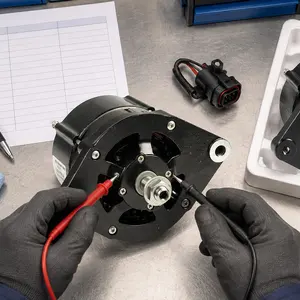


On-site reefer component replacement is appropriate when diagnosis has already identified the failed function, the exact service component can be matched to the installed unit, and the trailer location supports controlled work. Our technicians handle that service path for fleet-operated Thermo King and Carrier trailer refrigeration units in Illinois. The work order covers confirmation, installed replacement and an operating check. It does not assume that every failure can be repaired beside the trailer or that any requested part is available.
The distinction matters on Illinois freight routes. A disabled unit at a fleet yard near Joliet may offer stable access, lighting and room to isolate the trailer. A shoulder or crowded dock can create a different decision even when the component is already identified. Planned fleet assignments in neighboring states can be reviewed separately, based on the equipment, location and work scope.
Field Replacement Starts after the Failure Is Confirmed
For fleet service, a replacement becomes a field job only after the failed function and applicable part identity are supported by evidence. A controller message, a driver description or a component name written on an earlier estimate may help the intake, but none establishes fitment by itself.
We separate diagnosis from authorization. If the evidence still points to several possible causes, the call remains a diagnostic case and should follow the reefer diagnostics path. Once testing narrows the fault to an installed component and the unit identity is complete, field eligibility can be evaluated without turning the visit into a guess.
What Makes a Replacement Eligible for On-Site Work
Field eligibility is a combination of equipment scope and location control. The unit must provide service access that can be managed safely at the site. The planned work also needs a defined verification method that can be completed without forcing shop-only equipment or environmental control into a yard or roadside setting.
| Decision factor | Field-service indication | Reason to move to a shop |
|---|---|---|
| Failure evidence | One installed component has a supported fault path | Several causes remain open or the symptom cannot be reproduced |
| Unit identity | Model, serial and configuration are complete | Fitment depends on missing or conflicting identification |
| Access | Required service points are reachable with controlled isolation | Major disassembly or guarded internal access is required |
| Location | Trailer is stable, separated from traffic and adequately lit | Traffic, weather, dock activity or clearance cannot be controlled |
| Verification | The repaired function can be checked under applicable conditions | Extended load, circuit cleanliness or facility equipment is needed |
Unit Identification Controls Component Fitment
Thermo King and Carrier names identify brand families, not one interchangeable configuration. Model, serial information, controller family and the equipment already installed on the unit determine the applicable service part. The same trailer fleet can contain different generations, options and prior replacements.
A dispatch record should include clear photographs of the unit data plate and complete controller, plus the trailer asset number. That record helps prevent a part decision based on a cropped label or a familiar-looking housing. We regard incomplete identity as an open scope condition, because the cost of another visit is smaller than the risk of installing an unsuitable component.
The Worksite Is Part of the Repair Decision
A practical field location provides stable trailer positioning, safe technician access and enough separation from moving vehicles or dock traffic. Lighting, weather and clearance influence the decision. So does the ability to keep an open work area protected while tools and removed hardware are controlled.
At a fleet yard, those conditions can often be planned before arrival. A trailer at a busy dock may need to be moved to another bay or staging lane. On a highway call, immediate dispatch belongs to mobile reefer repair; component replacement is considered only after the failure and safe work position are established.
Field Installation Is Not a Parts-Counter Transaction
The reefer parts and component replacement service covers a diagnose, confirm, install and verify sequence. It does not publish stock, sell loose parts, promise a particular brand of replacement or convert a component name into an automatic work order.
This boundary protects both fitment and accountability. A fleet receives service tied to one identified asset and one documented result. If the request is simply for a supplier, shipment or catalog lookup, it falls outside this service branch.
Examples of Field-Scope Component Work
Component categories can include electrical supply items, selected sensors, switches, relays, belts, charging components and accessible controls when diagnosis and the exact unit configuration support that scope. These examples describe possible service categories. They are not an inventory list or a claim that every version can be handled at every location.
One yard call may arrive with a confirmed electrical interruption and clean access to the affected assembly. Another trailer can show the same high-level symptom while requiring guarded access and a longer test sequence. Component names may match; the service setting does not.
Thermo King and Carrier Work Follows the Installed Platform
Brand identification becomes material when controller generations, connectors, mounting arrangements or verification expectations differ. Thermo King work should route through the Thermo King reefer service branch when platform-specific knowledge governs the repair. Carrier-qualified scope follows the Carrier Transicold service branch.
An existing Carrier-specific on-site replacement page already handles that brand-qualified intent. This generic service remains focused on the field-versus-shop decision across supported trailer refrigeration units and does not duplicate the Carrier page.
When the Service Bay Is the Responsible Choice
Shop escalation is appropriate when the work depends on contamination control, refrigerant recovery, deeper disassembly, guarded access, lifting support or extended testing. A service bay also provides better conditions for a repeat failure that needs time and mode changes before the result can be trusted.
Weather can make a seemingly accessible replacement unsuitable for the field. So can a narrow dock lane where another vehicle can enter the work zone. Moving the job protects the equipment record from an incomplete repair and gives the technician the controls required by the actual scope.
How an On-Site Replacement Visit Is Organized
Intake begins with the asset, unit identity, symptom history and present location. The team then checks whether the failure is established, whether fitment can be confirmed and whether the worksite supports the planned access. Open questions remain visible in the work order.
At the trailer, the technician verifies that the arriving asset and installed configuration match the record. The authorized work proceeds within the confirmed limits. After installation, the original failed function, controller state and relevant operating behavior are observed before the result is released or routed for additional shop work.
What the Fleet Record Should Preserve
A useful service record identifies the asset, unit, installed component and reason for replacement. It notes the evidence that supported the decision, the conditions of the field installation, the operating check performed and any remaining limit.
That information matters when trailers rotate between tractors, yards and drivers. Without it, a later complaint can look unrelated and the next technician must rebuild the history. With it, recurrence can be compared to a specific installation and operating observation.
Illinois Coverage and Planned Fleet Assignments
Illinois is the primary service area for this work, including fleet yards, freight corridors and industrial locations where the trailer can be positioned safely. Location acceptance still depends on access and the actual replacement scope. Statewide language does not remove those conditions.
Fleet work in Indiana or another neighboring state may be arranged as a planned assignment. The request should identify the number of units, site controls, equipment mix and expected scope so travel and service sequencing can be evaluated before dispatch.
Service Boundaries and the Correct Next Route
This service owns replacement-qualified field work. A broad breakdown request belongs first to mobile dispatch. A fault code or symptom with no confirmed component belongs to diagnostics. Brand-specific platform work follows the Thermo King or Carrier branch, while major facility-dependent work moves to shop capability.
The main reefer repair service hub remains the entry point when the service path is unclear. It separates emergency response, diagnostics, maintenance, brand service and installed component replacement without forcing one request into several overlapping pages.
Information to Prepare for Field-Scope Review
- Record the trailer asset number, present Illinois location and whether it can be moved to a protected work position.
- Provide clear images of the complete unit data plate and controller, including any visible alarm state without clearing it.
- Describe the failed function, when it appeared and what qualified diagnosis has already established; avoid naming a part from appearance alone.
- Include recent work history and any configuration change that could affect fitment or the verification plan.
- State current load condition, dock or traffic restrictions, available clearance and any weather exposure that affects safe access.
Chicago-area and statewide Illinois fleet requests are coordinated from the actual unit location, site access and required service scope.