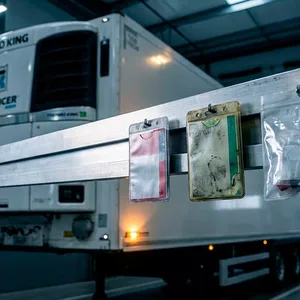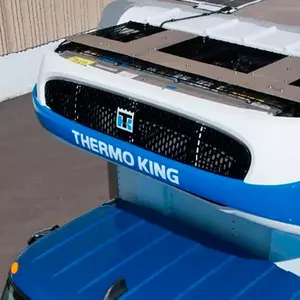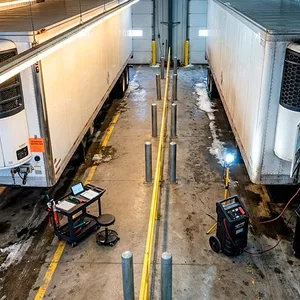


A Thermo King preventive maintenance checklist is only useful when it matches the unit it is built for. Precedent, Advancer, and e Series platforms do not share the same inspection priorities, do not carry the same maintenance risk, and should not leave a PM visit under the same release standard. For fleets running trailer refrigeration equipment through Chicago, the suburbs, and wider Chicagoland distribution patterns, the difference usually shows up after the unit goes back to work: slower pull-down, softer recovery after repeated door openings, unstable charging behavior, or a trailer that looked serviceable in the bay and did not stay stable on the route.
Our team handles Thermo King preventive maintenance as a platform-specific service, not as a generic reefer PM routine. The checklist is scoped around the actual unit family, the service position, the recent operating pattern, and the margin the fleet needs that unit to hold under load. A city-route e Series unit with repeated idle windows needs a different inspection emphasis than a diesel Precedent trailer on steadier lane work. An Advancer that still cools but has started recovering more softly after dock stops presents a different service decision than a unit with a clear hard fault. Good PM work accounts for those differences early, before a small performance loss turns into a repeat service call or a route problem that should have been caught in the shop.
What this Thermo King PM checklist service is supposed to accomplish
For transport refrigeration fleets, preventive maintenance is not a paperwork exercise. It is the service process that reduces the chance that a reefer goes back into service with hidden risk still inside it: weak charging support, coil restriction, wrong consumables, rising fuel-side vulnerability, soft performance drift, or a control-side issue that has not yet turned into an alarm event.
A strong Thermo King PM checklist service does four things. It identifies the exact platform. It applies the inspection logic that belongs to that platform. It verifies route readiness under working conditions, not only in the bay. And it closes the visit with a release decision the fleet can trust.
- Platform identification: Precedent, Advancer, and e Series need different maintenance emphasis from the start.
- Model-specific PM logic: diesel-hour planning, electric inspection tiers, alternator support, coolant chemistry, airflow behavior, and release criteria do not belong inside one universal reefer template.
- Failure prevention before the route: the service should catch weak charging, refrigerant mismatch, airflow loss, fuel-side degradation, mounting movement, and early performance drift before they become breakdown triggers.
- Release criteria instead of task completion: a finished PM visit should prove operational stability, not simply confirm that inspection lines were filled in.
Why one Thermo King maintenance checklist does not fit every platform
The most common mixed-fleet mistake is running one reefer PM template across dissimilar Thermo King families. That usually pushes cost downstream into softer performance, weaker release confidence, and repeat service visits. Architecture changes what deserves closer inspection, what counts as an early warning sign, and what a clean release should confirm after service.
| Platform | Primary maintenance anchor | What deserves closer attention | What a strong release should confirm |
|---|---|---|---|
| Precedent | Diesel Direct Electric platform with diesel service-hour logic | service interval position, oil and fuel filtration discipline, charging behavior, refrigerant compatibility, coil condition, structural and mounting integrity | stable temperature control, clean charge behavior, no cycling weakness, no obvious airflow restriction, consumables matched to the actual unit |
| Advancer | Electronically managed airflow with reduced scheduled maintenance burden | Eco Governor behavior, variable fan-drive stability, pull-down and recovery consistency, performance drift that has not yet become a hard alarm | fast pull-down, stable recovery after door openings, clean airflow response, no sign that the unit is being maintained like an older mechanical-first platform |
| e Series | Electric-platform inspection logic driven by battery health, charging support, and electric cooling-system integrity | alternator output under real route conditions, low-RPM charging weakness, OAT coolant compliance, inverter-side cooling, battery reserve under city work | stable electrical support, healthy charging behavior, predictable temperature control, no diesel-unit assumptions carried into electric-platform maintenance |
That is where a Thermo King PM checklist stops being generic. The service scope, the inspection emphasis, and the release decision all change with the platform.
Thermo King Precedent maintenance checklist service
A Thermo King Precedent maintenance checklist should be anchored to diesel-hour planning and real serviceable risk, not to calendar convenience. For current Precedent diesel packages, 3,000 hours is the standard maintenance anchor. Extended-life planning can move that window to 4,000 hours, but only when the correct operating and service conditions are actually being met. That is a technical threshold, not a shortcut.
Precedent PM also needs more specificity than many routine reefer inspections provide. Applicable diesel packages run 12 quarts of engine oil in TK488CR and TK486V25L1 engines. Two-stage fuel filtration matters as well: a 5-micron primary stage for water separation and a 3-micron secondary stage to protect stable fuel-side operation under route load. When those basics are handled loosely, the fleet does not get a real Thermo King Precedent maintenance service. It gets a generic trailer unit PM checklist with the right badge and the wrong discipline.
Chicago and suburban stop-and-go distribution expose Precedent weaknesses quickly. Repeated starts, dock dwell, mixed route speeds, and summer pull-down pressure can hide inside a unit that still cools. The problem often surfaces later as unstable recovery, weaker charge support, or a trailer that feels less stable once route demand rises. A good Precedent maintenance checklist is built to catch that earlier.
What a Precedent PM scope should verify
- Service interval position: whether the unit is at a true 3,000-hour service point or inside a qualified extended-life window.
- Oil and filtration discipline: 12-quart oil volume, two-stage fuel filtration condition, and diesel-side consumables matched to the actual platform.
- Refrigerant compatibility: current Precedent families use R452A, while older units may still carry R404A legacy history. That should be confirmed on the unit, not guessed from fleet age.
- Charging and electrical integrity: stable charge behavior matters even when the unit has not thrown an obvious complaint.
- Coil and airflow cleanliness: condenser and evaporator condition directly affect pull-down capacity under summer demand.
- Structural and mounting condition: hardware movement on a heavy diesel TRU creates cumulative reliability risk, not just vibration or noise.
Thermo King Advancer maintenance checklist service
An Advancer maintenance checklist should not be a renamed Precedent checklist. It is a different service problem. OEM material around the A-Series points to a 3,000-hour maintenance interval and roughly 30 percent less maintenance labor than earlier designs. That advantage only holds when the platform is inspected like an Advancer unit. If the PM visit ignores control-side stability and airflow behavior, the fleet gives away the margin the platform was designed to deliver.
Advancer shifts the maintenance conversation away from older mechanical service drag and toward consistent performance under changing load. Eco Governor behavior, variable fan-drive stability, and recovery after repeated door openings are not side notes. They are part of what makes the platform feel strong in daily operation. OEM positioning around Advancer also points to faster pull-down than previous platform generations. If an Advancer starts taking longer to recover on busy local routes, the service question is no longer whether it still runs. The real question is why a platform built for that response is no longer delivering it cleanly.
That is especially important on Chicago distribution work. Repeated stops, tight dock schedules, and variable load patterns do not always create a dramatic hard fault. More often they expose performance drift first. A good Advancer maintenance checklist service is built to catch that before it reaches dispatch.
What should be explicit in an Advancer PM scope
- 3,000-hour service position as the scheduled maintenance anchor.
- Eco Governor behavior as a true inspection point, not background context.
- Variable fan-drive and airflow consistency because Advancer performance depends heavily on electronically managed airflow.
- Pull-down and recovery verification because a platform known for strong response should not leave PM with soft recovery or weak thermal confidence.
- Performance drift documentation when the unit has not failed outright but has clearly lost operating margin.
Thermo King e Series maintenance checklist service
An e Series maintenance checklist is not driven by diesel logic. It is driven by battery health, charging support, electric cooling-system integrity, and the condition of the vehicle-to-unit electrical environment. This is where fleets run into trouble when electric-unit PM is borrowed from older diesel practice.
Electric platforms follow a different inspection rhythm. Depending on the model and operating context, OEM schedules use tiered service logic at 500, 1,000, and 2,000 hours, with calendar-time triggers running in parallel. The service decision should follow whichever threshold arrives first, not whichever one is easier to postpone.
Coolant and charging support are where electric-platform PM becomes operationally serious. For e1000-type applications, OAT extended-life coolant is the required baseline, and the planning anchor runs to 5 years or 12,000 hours. For e200-type vehicle-powered applications, full-capacity operation requires 115 amps from the vehicle alternator. Standard charging output can fall to roughly 60 to 75 percent of rated capacity at idle. On Chicago urban distribution routes with repeated low-RPM dwell, that gap matters. A unit can leave service looking clean and still return to work with the same charging weakness waiting for the next demanding day.
What a fleet-side e Series PM scope should not miss
- Battery condition and charging margin evaluated against the real duty cycle, not only a static shop condition.
- Alternator support for vehicle-powered electric units because nameplate alternator rating does not tell the full story under idle-heavy routing.
- OAT coolant chemistry confirmed on the unit, not assumed from the maintenance record.
- Inverter-side and electric cooling-system integrity because electric-platform wear points do not behave like older mechanical ones.
- History-driven review when the unit has shown weak reserve, unstable charging, or repeat shutdown risk under city work.
Checklist details that directly affect Thermo King fleet uptime
Some maintenance details look minor until they are wrong. Refrigerant compatibility is one. Current Thermo King Precedent, Advancer, and e Series families use R452A as the modern standard, while older units may still carry R404A history. The label on the unit is the authority. Memory and fleet age are not.
Coil cleaning standards matter for the same reason. Power-washing coils above 600 psi can flatten fins and reduce the airflow the service visit is supposed to protect. A PM visit that improves appearance while reducing cooling efficiency is not preventive maintenance.
Those are the kinds of service decisions that determine whether a Thermo King PM checklist protects route stability or only creates the appearance of maintenance discipline.
What a completed Thermo King PM service should prove before release
A professional PM visit ends with release criteria. That is what separates a real Thermo King trailer reefer PM service from a generic inspection routine. The unit should leave with evidence that it is ready for route work, not simply with evidence that work occurred.
- Operational pass status: the unit clears relevant pre-trip or self-check logic without unresolved instability.
- Positive charge behavior: startup and operating electrical support look normal for the platform.
- Thermal stability: the unit pulls down and holds setpoint without abnormal cycling, soft recovery, or obvious airflow restriction.
- Compatibility confirmation: refrigerant, coolant, oil, and filtration decisions match the actual platform family.
- Service-history awareness: when ServiceWatch or recent trend data is available, it should support the release decision rather than sit unused.
Most fleet complaints start as loss of operating margin, not as a clean hard stop. Pull-down stretches. Recovery softens. Electrical reserve narrows. The unit may still run for a while, but the next hotter day, longer dock wait, or heavier route usually exposes what the PM visit missed.
Where generic Thermo King PM visits usually fail fleets
They treat “still cooling” as “healthy”
A unit that still cools can still be moving toward route failure. Soft pull-down, slower recovery after repeated door openings, and less stable hold behavior are margin problems. A model-aware PM service is supposed to catch them before they become operational complaints.
They ignore Chicago route reality
Urban distribution and suburban multi-stop delivery through Chicago and the surrounding area create repeated idle windows, frequent starts, dock-heavy dwell time, and tighter operating transitions than easier lane work. That environment increases charging stress, thermal recovery demand, and the speed at which hidden weakness turns into a visible problem. A checklist that does not account for route reality is too generic for local fleet operations.
They treat electric support as secondary
On e Series applications, alternator support, battery reserve, and electric cooling-system integrity are not side checks. They are primary reliability anchors. Weak charging support is one of the fastest ways to send a city-route unit back into service carrying the same problem under a different description.
They close the visit without real release criteria
A generic checklist often ends where the last task line ends. A sound PM visit ends where the unit proves route readiness. The difference usually becomes visible on the first demanding day after service.
What is included in our Thermo King preventive maintenance service
Our PM service is structured around platform differences, route conditions, and release quality. We do not treat Precedent, Advancer, and e Series as one maintenance problem with three labels.
- Platform-specific scoping: we confirm the exact unit family and build the inspection path around its actual architecture.
- Service position and history review: hours, usage pattern, seasonal demand, repeat complaint history, and platform-specific warning signs are reviewed before the checklist is finalized.
- Model-aware inspection: diesel-side, electric-side, charging support, coolant chemistry, filtration, coil condition, refrigerant compatibility, airflow behavior, and structural integrity are checked according to the actual unit family.
- Performance-focused verification: Advancer recovery behavior, Precedent service-hour discipline, and e Series charging stability are evaluated as platform-specific release factors.
- Trend-aware review: when available, service-history or ServiceWatch data is used to identify gradual deterioration before it becomes a hard shutdown or alarm-driven complaint.
- Release documentation: the visit closes around what the unit proved, what was found, and what should be watched before the next service interval.
When this Thermo King checklist service becomes the right conversation
This page matters most when a fleet is no longer comfortable with a generic reefer PM routine and needs a Thermo King-specific checklist service for the platform in front of it. That usually happens in a few predictable situations: a mixed fleet is using one maintenance template across Precedent, Advancer, and e Series units; an Advancer has started losing recovery quality without a hard fault; an e Series unit shows charging weakness on city work; a Precedent is approaching a real service threshold and the fleet needs a defensible release decision instead of a routine inspection note.
- Before peak summer periods when condenser and evaporator cleanliness directly affect pull-down and hold performance.
- Before winter reliability becomes critical on diesel and electric units with narrow starting or charging margin.
- When route assignments change from steadier lane work to repeated-stop city delivery or heavier suburban distribution.
- When the same soft complaint keeps returning after prior PM visits.
- When one checklist is being used across all three Thermo King platform families even though the equipment clearly needs different inspection logic.
How to judge whether a Thermo King PM provider is actually model-aware
When comparing providers for Thermo King maintenance service in Chicago or the suburbs, ask direct questions. Can they explain why 3,000-hour diesel service logic does not apply to e Series tiered inspection schedules? Do they treat Eco Governor behavior and variable fan-drive stability as real Advancer PM items? Do they know the difference between OAT extended-life coolant requirements on e1000 applications and routine diesel-unit coolant habits? Can they define release criteria in operational terms rather than simply listing completed tasks?
Specific answers usually come from real platform familiarity. Broad reefer language usually means the provider is still working from a generic PM template. On demanding Chicagoland routes, that difference shows up in repeat service calls, unresolved soft failures, and PM records that look complete without supporting confident release decisions.
Thermo King preventive maintenance service for Chicago-area fleets
Fleets running Thermo King trailer units across Chicago, suburban delivery corridors, and wider Chicagoland distribution patterns need a PM service that respects the difference between Precedent, Advancer, and e Series equipment. That is how repeat complaints get reduced, hidden weakness gets found before the route exposes it, and preventive maintenance becomes a real uptime decision instead of a routine service entry.
If your fleet needs a Thermo King preventive maintenance checklist service built around the actual unit, the actual duty cycle, and a defensible release standard, our team can scope that work correctly, review the unit in context, and help you put a cleaner, more reliable maintenance process behind the refrigeration equipment your operation depends on every day.
Illinois Service Area
Primary service coverage extends across Illinois, including Chicago-area freight facilities, fleet yards, docks, and major interstate routes. Fleet work in Indiana or another state may be arranged when travel, access, schedule, and scope are confirmed in advance; it is not represented as blanket local coverage.