

Service scope: We service trailer and straight-truck TRUs; not small van and last-mile units.
SB-210 and SB-230 fleet downtime: what we fix and how we keep units from coming back
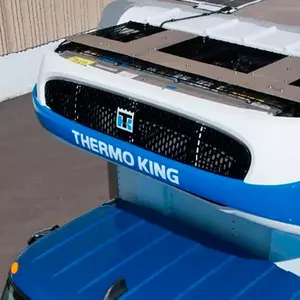
sb210 thermo king and thermo king sb230 are legacy Thermo King SB-Series TRUs that remain active in fleet operations because the installed base is still large. These units often stay in rotation on local lanes, standby applications, and secondary routes where the operation needs dependable temperature control on an older platform.
SB parks are often mixed. Work orders and searches may also reference thermo king sb200, thermo king sb310, sb330 thermo king, and shorthand families such as thermo king sb2, thermo king sb3, and sb3 thermo king. For service intake, those adjacent names matter because misidentification is a common cause of wrong parts matching, scope drift, and repeat returns.
Thermo King SB-Series repair service in Chicago and across Illinois
Ustarshah Inc. supports fleet operators with Thermo King SB-Series diagnostics, repair scoping, and verification for dispatch stability across Chicago and Illinois. Service planning is organized around a practical outcome: a route-ready closeout that matches the way the failure pattern appears in real operation, not just a short yard check.
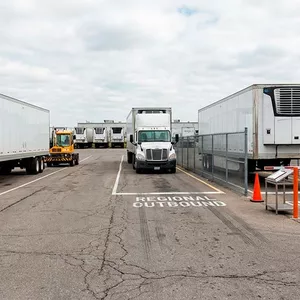
We support fleet routing across Chicagoland and major Illinois freight corridors, including high-volume dock and yard operations where repeat returns disrupt dispatch planning.
If your unit can be routed to a controlled shop evaluation, use the shop location page for directions and routing details: Reefer Repair Shop Location and Details.
What your fleet receives as the service deliverable
SB service is purchased for certainty and repeatability. The deliverable is not just “a repair,” but a scoped outcome that supports dispatch decisions and reduces repeat events.
- Service intake package: captured unit identification, operating context, and the repeatable fault pattern as reported by the fleet.
- Scoped diagnostic outcome: fault isolated to a subsystem before parts and labor are committed.
- Repair scope boundaries: what was corrected, what was excluded, and what triggers escalation if symptoms recur.
- Route-ready verification record: an operating window that reflects the fleet complaint and confirms stable operation before release.
- Decision routing: a clear outcome for dispatch—release, schedule corrective work, or route to controlled diagnostics.
Next step: if you want an SB-210 or SB-230 scoped for return-to-route stability, use our contact page to start intake: Request SB-Series service intake.
Independent Thermo King SB-Series service partner for Chicago and Illinois fleets
Ustarshah Inc. operates as an independent fleet repair partner for Thermo King SB-Series service across Chicago and Illinois. Our process is built around one outcome: units that do not return with the same complaint because scope and verification are aligned to the fleet’s runtime failure pattern.
Fleet managers route SB units to us when repeat events are disrupting dispatch: the same trailer returns with the same temperature complaint, the same alarm pattern, or a different symptom driven by the same underlying instability. Intake discipline and verification discipline are how that cycle is broken in practice.
SB-210 vs SB-230 differences that matter for service intake
For fleets, the practical differences between SB-210 and SB-230 show up in how the unit is configured and how it is used. That is why the service decision is never made from the model name alone. The correct scope starts with unit identification and the operating profile, then ties the complaint to a repeatable runtime pattern.
SB units are encountered with different Smart Reefer controller generations. For service intake, controller era changes alarm presentation and event history behavior. In mixed parks, SB-200, SB-210, SB-230, SB-310, and SB-330 identifiers may all appear in work orders, so the correct starting point is always the unit’s identification details rather than a “looks similar” assumption.
- Controller era and interface: SB configurations may be paired with different Smart Reefer controller generations (for example SR-2 versus SR-3), which changes alarm presentation and how the unit reports events.
- Performance options: some SB-230 configurations include options such as Electronic Throttling Valve (ETV) referenced in OEM performance literature; option presence changes what “normal” pull-down and recovery behavior looks like.
- Configuration first: confirm the exact build and control configuration from unit identification details before any parts are scoped.
- Duty cycle alignment: document whether the unit is used for short local runs, standby, or recovery-heavy routes where repeated pull-down and door cycles increase operational stress.
- Mixed-fleet risk: in SB parks that include SB-200, SB-210, SB-230, SB-310, and SB-330, “looks similar” is not a matching method. Correct identification prevents mismatch and repeat rework.
SB-Series platform context that changes diagnostic risk
SB-Series service outcomes are driven less by the badge and more by platform constraints and age-driven failure patterns. Even when a unit starts and cools, it can still fail on route if the fault is runtime-triggered or tied to electrical integrity.
On SB configurations built around the TK486V engine platform, OEM technical literature describes a 4-cylinder direct-injection diesel with 2091 cm3 displacement, 18:1 compression ratio, and a continuous power rating of 25.3 kW at 2200 RPM. Those platform realities affect what data we capture at intake, what we verify under runtime, and how we interpret repeat alarm patterns before return-to-route.
For SB-era configurations, OEM technical literature includes operating parameters that matter for service scoping and verification. Examples include a standard setpoint range of -20°F to 80°F with programmable setpoints extending to -25°F to 90°F, and high-side protection via high-pressure cutout ranges such as 450–470 psi on applicable configurations.
Controller era also matters. Smart Reefer controller generations affect alarm display logic and how events are presented to operators. The commercial service goal is not a yard-pass. The goal is a route-ready closeout supported by a verification window that matches how the fleet reports the failure pattern.
Service intake for SB units
SB jobs become expensive when the request arrives as a single symptom without the runtime pattern. Before scoping SB-210 or SB-230 work, intake needs enough detail to prevent scope drift, prevent mismatch, and support a clean release decision for dispatch.
- Exact unit identification: SB family and configuration designation used by the fleet.
- Operating profile: local lanes vs regional runs, standby usage, door-cycle frequency, and seasonal exposure.
- Fault pattern: what repeats and when it repeats during startup, pull-down, recovery, after runtime, or after heavy door-cycle activity.
- Symptoms: weak pull-down, slow recovery, short cycling, intermittent shutdown, unstable temperature control, airflow complaints, abnormal noise, vibration complaints.
- Recent repair history: what was replaced or adjusted recently so the next scope targets the true driver, not just the latest symptom.
Not sure what information to send first? Start with unit identification and alarm history and use the contact page to route your request: Request SB-Series intake.
How SB-210 and SB-230 repair is delivered in commercial service
Independent SB service is most reliable when it is run as a controlled workflow. The workflow keeps the scope accurate, isolates the fault driver before committing parts, and produces a closeout that supports a clear route release decision.
- Eligibility and model confirmation for trailer and straight-truck TRU service, then SB-210 or SB-230 identification capture.
- Triage based on recurrence and route exposure to decide whether the unit can continue safely, needs stabilization, or should be routed to controlled shop diagnostics.
- Fault isolation to a subsystem so parts and labor match the true driver of the complaint.
- Repair execution with defined boundaries and recorded findings.
- Route-ready verification using an operating window that matches how the failure shows up for the fleet.
Common Thermo King SB-210 and SB-230 repair scopes
SB service calls cluster into repeatable patterns. Each pattern below describes what fleets experience and what the repair scope is designed to achieve as a service outcome.
SB-210 and SB-230 repeat alarms and runtime intermittent failures
Legacy SB units often return with repeat alarms or intermittent shutdown behavior that appears after runtime rather than at startup. A yard-pass can be misleading if the unit is not evaluated in conditions that resemble dispatch. The service objective is to isolate what is driving recurrence and confirm stable behavior after the unit has been operating long enough for the fault pattern to appear. A common dispatch report is an alarm sequence that only appears after time-on-unit, not during a short pre-trip check.
SB-210 and SB-230 electrical aging and intermittent fault behavior
Electrical aging is a major driver of SB instability. Harness degradation, connector corrosion, and grounding problems can produce inconsistent behavior between runs and multiple symptoms that share one root cause. Effective service isolates the failing segment and verifies stability under operating conditions consistent with the complaint so the same trailer does not return with the same issue. This pattern is frequently reported as “works on the yard, fails on the route” when event history shows recurrence under runtime exposure.
SB-210 and SB-230 weak pull-down and recovery performance problems
Weak pull-down and poor recovery often become visible only under sustained load, higher ambient, or repeated recovery cycles. A brief check can look acceptable while the unit fails in the fleet’s real use case. The service outcome is stable pull-down behavior and stable temperature control in the same operating context that previously caused failure. A common operational trigger is multi-stop routing where recovery time is short and door cycles compress the window for temperature stabilization.
SB-210 and SB-230 vibration-driven reliability returns
Vibration complaints and vibration-driven comebacks are common on older units. For fleets, vibration is a route reliability risk because it turns small issues into recurring returns. The service goal is to address the underlying stability driver so the unit does not re-enter the shop with a different symptom caused by the same weakness. Fleets often describe this as “one trailer keeps coming back” after lane changes, yard moves, or equipment rotation increases vibration exposure.
Repair versus upgrade to Precedent
For many fleets, SB repair is not a one-time decision. The practical question is whether a unit can be returned to predictable behavior with a scoped repair and verification, or whether repeated downtime justifies a controlled transition plan to a newer platform. This page supports both paths by keeping intake evidence structured and by turning repeat alarms and repeat returns into a decision input rather than a guess.
- Repair stays rational when the fault is isolated to one subsystem and the unit can pass a route-ready verification window that matches the triggering pattern.
- Upgrade planning becomes practical when symptoms recur across multiple subsystems and the fleet experiences repeat returns that consume dispatch time and create product risk.
If your fleet is evaluating repair versus upgrade, use our contact page to route the request with unit history so we can scope the next step: Discuss SB repair vs upgrade planning.
Thermo King SB alarm codes for service triage
Fleet calls often start from an alarm code, not from a component description. On SB units, the productive use of alarm codes is triage. The goal is to decide whether the unit can continue, needs stabilization, or should be routed to controlled shop diagnostics, then link the code pattern to the right intake evidence.
For triage, we treat alarm codes as structured intake inputs: code history, frequency, when it triggers, and operating context. The table below is designed for dispatch and service scoping, not for procedural repair steps.
| Code / alarm name | OEM meaning (short) | Intake bucket | Data to capture at intake |
|---|---|---|---|
| 02 — Check Evaporator Coil Sensor | Evaporator sensor out of range / disconnected | Monitor | Setpoint, return/box temperature trend, alarm frequency, time-of-occurrence |
| 03 — Check Return Air Sensor | Return air control sensor fault | Monitor | Ambient, setpoint, return air readings, alarm frequency, runtime when triggered |
| 09 — High Evaporator Temperature | Temperature exceeds limit relative to setpoint | Stabilize before dispatch | Product risk, setpoint, door-cycle history, ambient, recovery timeline |
| 10 — High Discharge Pressure | High-side pressure condition detected | Stabilize before dispatch | Ambient, load level, event frequency, runtime when triggered |
| 12 — Sensor or Digital Input Shutdown | Critical input event with shutdown condition | Route to controlled shop diagnostics | Alarm history, frequency, runtime when triggered, setpoint, operating mode |
| 17 — Engine Failed to Crank | Crank failure event | Stabilize before dispatch | Battery/charging context, start attempts count, event timing, recent electrical work |
| 18 — High Engine Coolant Temperature | Engine overtemperature condition | Route to controlled shop diagnostics | Ambient, runtime when triggered, event frequency, prior overheating events |
| 19 — Low Engine Oil Pressure | Low oil pressure condition | Route to controlled shop diagnostics | Event timing, runtime when triggered, unit hours, recent service history |
| 20 — Engine Failed to Start | Start failure event | Stabilize before dispatch | Fuel context, start attempts, event timing, recent maintenance history |
| 23 — Cooling Cycle Fault | Unable to maintain cooling relative to setpoint | Route to controlled shop diagnostics | Ambient, setpoint, pull-down time, recovery behavior, alarm frequency |
| 32 — Refrigeration Capacity Low (shutdown) | Low capacity condition leading to shutdown | Route to controlled shop diagnostics | Alarm frequency, runtime when triggered, ambient, load level, setpoint |
| 61 — Low Battery Voltage | Low voltage condition | Monitor | Voltage trend, unit hours, recent electrical events, standby usage (if applicable) |
| 82 — High Compressor Temp Shutdown | Compressor protection shutdown condition | Route to controlled shop diagnostics | Alarm history, ambient, setpoint, runtime window prior to shutdown, recurrence |
| 89 — Check ETV Circuit | ETV circuit event (if equipped) | Route to controlled shop diagnostics | Option presence, alarm frequency, runtime when triggered, setpoint, recovery behavior |
| 96 — Low Fuel Level | Low fuel level event | Stabilize before dispatch | Fuel state at event, event frequency, recent fueling pattern, lane profile |
| 108 — Door Open Timeout | Door-open duration exceeded threshold | Monitor | Door-cycle frequency, route/stop pattern, setpoint, temperature deviation period |