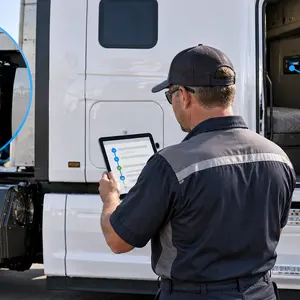


A TriPac APU may accumulate hours while a tractor is parked, then sit through periods of light use while calendar time continues. Preventive maintenance has to account for both patterns. The correct schedule begins with the installed platform, serial information, current hour-meter reading and the Thermo King manual assigned to that system.
Thermo King TriPac preventive maintenance is not one generic oil-change package. Diesel TriPac 3 and TriPac Evolution systems have engine, electrical, structural and sleeper-climate service domains. Electric TriPac Envidia uses a different architecture. A useful program keeps those schedules separate, documents every visit and verifies how the system performs after service.
Identify the exact TriPac platform before scheduling service
Record the product name and serial information from the installed APU, the tractor asset number and the in-cab controller. TriPac 3 and TriPac Evolution are distinct diesel generations. TriPac Envidia is an electric APU system. Similar enclosures, symptoms or driver descriptions do not make their maintenance tables interchangeable.
Photograph the closed frame-rail installation and data plate without opening the housing. Confirm that the equipment belongs to the tractor sleeper system, not the refrigeration unit mounted on a trailer. Trailer TRU preventive maintenance is a separate scope with its own controller, operating hours and service record.
Use the manual revision assigned to the installed APU
The model name alone is not enough to publish a universal TriPac service interval. Options, emissions equipment, coolant arrangement and document revision can change required materials or procedures. The service file should identify the manual used to select each due item so a later technician can trace the decision.
As a documented example, Thermo King operator manual TK 57075-19-OP-EN for TriPac 3 organizes checks around pre-trip, 500-hour and annual or 2,000-hour columns. That table is evidence for the system covered by that manual, not permission to copy the same interval onto every Evolution or Envidia installation.
Track operating hours and calendar time together
High-use tractors may reach an hour threshold well before an annual date. Low-use or seasonal tractors can reach the calendar limit with relatively few APU hours. The maintenance record should show the current meter reading, the previous service reading and date, and which threshold makes the next item due.
Do not reset or estimate missing hours simply to complete a work order. If the meter history is unavailable, document the gap, verify the current reading and build a new baseline tied to the tractor. Fleet records, invoices and controller history may help reconstruct earlier service, but the source should remain visible.
Begin with a controlled pre-service inspection
Inspect the closed APU in its actual frame-rail position before panels are opened. Look for fluid evidence, damaged or loose exterior parts, obstructed airflow openings, impact marks, abnormal vibration, unusual noise and changes in mounting alignment. Record what was present before cleaning removes the evidence.
Automatic-start capability requires a controlled safety state. The assigned manual and qualified service procedure determine shutdown, isolation and access. Drivers should not be asked to open the enclosure, reach toward belts or fans, disconnect batteries, or bypass a protection device for a maintenance photograph.
Service the diesel engine by the identified specification
For a diesel TriPac, preventive work can include engine-oil level and condition, oil and filter service, coolant condition where applicable, belt condition and tension, air-cleaner inspection, fuel filtration, unusual noise, engine speed and mount condition. The actual due items come from the model-specific table and installed options.
Filter brand, oil classification and hot-service instructions matter. The TriPac 3 manual cited above distinguishes a longer oil interval when the specified Thermo King filter and qualifying oil are used from a shorter interval with other permitted materials. Units equipped with exhaust aftertreatment carry additional oil requirements. The work order should record the material actually installed, not merely “oil service.”
Keep coolant, fuel and refrigerant systems distinct
Engine coolant, diesel fuel and sleeper air-conditioning refrigerant are separate systems. A trace near the APU should be identified by source before a part is selected or a fluid is added. Mixing those paths in a diagnosis can hide a leak and create an inaccurate maintenance record.
Where a closed-loop cooling option is installed, coolant type, protection and replacement timing follow that configuration. Fuel pre-filter and tank checks follow the diesel schedule. Refrigerant service belongs to the cab air-conditioning circuit and requires the correct recovery and service process, not an engine-fluid top-off.
Inspect belts, filters and airflow without inventing a parts kit
Belt wear, tension and alignment are evaluated against the installed diesel APU. Air-cleaner condition depends on contamination and duty. Condenser and pre-cooler surfaces, the evaporator filter and water drains also affect performance. Cleaning must protect coil fins and should not force debris deeper into the air path.
A photograph of a generic belt or filter cannot confirm fitment. The parts request needs the APU model and serial information, then the installed part and official parts reference are compared. Fleet standardization is useful only after compatible systems and materials have been verified.
Include electrical and charging checks in the PM visit
Preventive maintenance should inspect battery terminals, electrical connections and harness condition where the applicable schedule calls for them. Protection devices and charging behavior are checked under controlled conditions. Rubbing, loose support or heat evidence should be documented before a connector or cable is disturbed.
Charging verification is more than a dashboard glance. The technician identifies the platform and power path, observes the system state and records measured behavior with the relevant sleeper loads. Battery, alternator, inverter and wiring decisions follow evidence; none should be replaced automatically because the driver reported “not charging.”
Check mounting, enclosure and structural condition
The APU operates in a harsh area behind the sleeper and ahead of the drive axles. Road contamination, vibration and prior repairs can affect brackets, fasteners, enclosure panels and routing. The inspection should compare the actual mounting arrangement with the applicable service information and record cracks, contact, looseness or poor alignment.
Torque values are configuration-specific. A number printed for one claw mount or direct-frame arrangement should not be reused for another installation without confirming the correct manual. Preventive work records the verified configuration and the procedure used.
Maintain sleeper cooling and heating as operating systems
The APU supports comfort inside the tractor sleeper. Cab airflow, evaporator filter condition, drains, condenser airflow and refrigerant-circuit performance can affect cooling. Heating may use its own intake, duct, exhaust and service items. These components are not part of the trailer cargo refrigeration circuit.
After scheduled work, request the appropriate sleeper mode and observe airflow, temperature response and system stability. A short functional check does not prove performance through every overnight condition, but it can show whether the serviced system responds normally or needs a separate diagnostic scope.
Keep electric Envidia maintenance separate from diesel TriPac service
An electric Envidia service plan centers on its battery and electrical architecture, charging sources, protection, cab climate components, airflow and installed options. It does not receive diesel engine oil, a fuel filter or an engine belt service simply because the vehicle also carries the TriPac name.
Use the Envidia model and serial information to select its own operator and service documentation. Record battery-related warnings, shore-power or truck-charging behavior where equipped, enclosure condition and comfort performance. Do not transfer a TriPac 3 hour table into the electric record.
Turn the maintenance visit into a repeatable fleet program
A fleet program groups tractors by verified APU platform and manual revision, not by a broad “APU equipped” label. Each asset keeps its own hour and calendar history. Common filters or materials can be stocked only after fitment and specification are confirmed for every included group.
Planned service can be coordinated with tractor availability, driver rest schedules and other maintenance without hiding overdue items. If inspection reveals a fault outside the approved PM scope, the record should identify the finding and obtain authorization before corrective repair is added.
TriPac preventive maintenance intake checklist
- Tractor identity: fleet unit number, VIN when required, current location and service contact.
- APU identity: TriPac 3, TriPac Evolution or TriPac Envidia, plus model and serial information.
- Usage: current hours and the last recorded service.
- Documentation: assigned operator or service manual revision, applicable interval table and the source used to select every due item.
- Installed options: cooling arrangement, heater, inverter, shore power or emissions equipment where present.
- Current condition: leaks, noise, vibration, warning history, charging complaint or weak sleeper comfort.
- Authorization: approved preventive scope and a contact for findings that require corrective work.
Clear photographs of the data plate, hour meter or HMI and closed installation reduce identification errors. Keep every image attached to the correct tractor; a fleet photo folder without asset labels is not a maintenance record.
Document the service and the next due point
The closeout should list the tractor, APU platform, serial information, hours, date, inspected systems, parts and fluids used, measurements, findings and completed work. It should distinguish a scheduled replacement from a component left in service after inspection. Any deferred item needs a reason and follow-up owner.
Set the next due point from the same verified schedule and record both hour and calendar triggers when applicable. If the APU needs diagnostics, comfort-system repair or a model-specific corrective procedure, create that next scope instead of describing an incomplete PM visit as a full repair.
Thermo King TriPac maintenance service in Illinois
Chicago is the service base, with planned TriPac APU maintenance coordinated across Illinois according to fleet location, tractor availability, safe access and the work required. Route and yard scheduling can support multiple assets when each tractor's platform, hours and scope are prepared in advance.
Planned fleet assignments in nearby states, including Indiana, may be arranged when travel, access and scope are agreed beforehand. That option is scheduled work and does not create automatic emergency coverage outside Illinois.