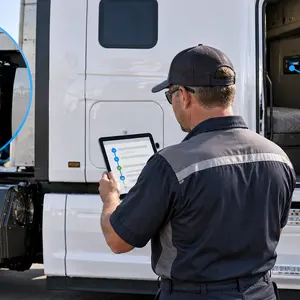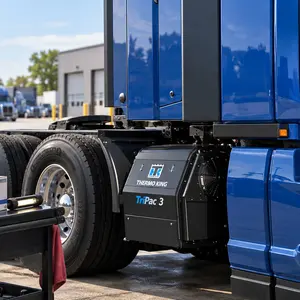


A sleeper can stay uncomfortable even while a TriPac display remains on or the diesel APU continues to run. That symptom does not identify a failed compressor, low refrigerant, heater or controller by itself. Useful diagnosis starts with the requested cab mode, actual airflow, temperature response, power state and the exact TriPac platform installed on the tractor.
Thermo King TriPac no-cooling and no-heat service belongs to the tractor sleeper climate system. It does not concern the temperature of freight inside a refrigerated trailer. Separating those systems prevents a cab-comfort complaint from being routed to a trailer TRU technician or a cargo refrigeration alarm from being reported as an APU fault.
Confirm that the complaint is inside the tractor sleeper
Record where the temperature problem is felt and which outlet or bunk area is affected. TriPac systems support cab comfort and auxiliary hotel loads. Their equipment may include a frame-rail APU or battery enclosure, a condenser, an evaporator or climate-control module, an in-cab HMI and an optional heater, depending on platform and configuration.
A refrigeration unit mounted on the front of a trailer serves the cargo box. Its controller, setpoint, evaporator and alarms do not establish how the sleeper system is performing. For intake, keep the tractor asset, APU data and sleeper observations together.
Identify TriPac 3, Evolution or Envidia before testing
TriPac 3 and TriPac Evolution are diesel APU platforms with generation-specific controls and service information. TriPac Envidia uses an electric architecture with battery and charging components. The cooling and heating request may sound the same to a driver, yet the power path and installed components can differ substantially.
Photograph the closed exterior enclosure, model and serial information, and the complete in-cab HMI. Do not select a fuse, heater procedure, refrigerant value or wiring path from a different generation. Installed options must also be confirmed; a feature shown in one manual may not be present on every tractor.
Record the requested mode and the full operating sequence
Write down whether cooling, heat or fan-only operation was requested, the selected temperature, the approximate sleeper temperature and how long the system had been operating. Note ambient conditions, direct sun, recent door openings and whether the main truck engine was running. These facts establish the load surrounding the complaint.
Then describe the sequence. Did the HMI accept the request? Record whether the APU or electrical system became active, when airflow began, whether it weakened or stopped, and whether outlet temperature changed briefly before returning toward ambient. A timeline is more useful than “AC does not work.”
Separate weak airflow from air at the wrong temperature
Low air volume can point the service path toward an obstructed filter, return-air restriction, outlet or duct problem, evaporator icing, blower operation or control state. Normal airflow that never becomes cool or warm requires a different set of checks. The driver should describe both volume and temperature rather than combining them into one comfort rating.
Check more than one accessible outlet when the sleeper layout uses multiple vents. A closed louver or blocked return can make one area uncomfortable while the system continues to operate. Do not remove under-bunk covers or reach into a blower compartment for intake.
Check HMI state without treating it as the whole diagnosis
Capture the display before settings are changed. Note active mode, fan selection, visible warning and whether the screen remains powered when comfort fades. If the display alternates or an alarm appears, preserve a photograph or short video and route the event through the TriPac diagnostics scope.
An illuminated HMI proves only that the control has power and is presenting a state. It does not prove that the condenser, evaporator, heater, blower or charging system is delivering the requested output. A dark or rebooting HMI may move the investigation toward a broader power or system shutdown.
Evaluate the accessible cab air path
The technician checks the filter, return-air opening, outlet condition and water-drain evidence for the identified system. A loaded filter can reduce airflow. A displaced duct or blocked return can change distribution. Water where it should not collect can indicate a drain or icing condition that requires further inspection.
Cab air components may be installed under the bunk or in another protected sleeper location. They are not cargo evaporators. Any panel removal follows the relevant service information and a controlled electrical state.
Observe exterior condenser airflow and installation condition
The frame-rail area is exposed to road debris and contamination. With covers closed during intake, inspect the visible fan grille, airflow opening, mounting and surrounding clearance. Record debris, impact damage, missing fasteners, fluid evidence or a fan that does not behave as expected during the requested mode.
Cleaning methods must protect coil fins and electrical components. A pressure-washer blast or improvised probe can create damage that was not part of the original complaint. If safe access or weather conditions are inadequate, controlled shop inspection is the better next step.
Diagnose a TriPac no-cooling complaint as a system
Cooling performance depends on the installed controls, available power, condenser airflow, cab airflow and the refrigerant circuit. The service path verifies the request, observes component response, measures temperatures and electrical behavior, and checks refrigerant-side evidence with the correct equipment. One symptom cannot choose a part.
Do not add refrigerant because the sleeper feels warm. The circuit must be identified, leak evidence evaluated and charge handled by the applicable service procedure. Compressor, fan, sensor, valve, wiring and refrigerant decisions follow verified findings for that platform.
Distinguish icing, drainage and intermittent cooling
A system that cools normally at first and loses airflow later presents a different sequence from one that never produces cool air. Record the elapsed time, fan behavior, visible water or ice evidence, ambient humidity and what happens after the system remains off. Do not chip ice or force airflow through a blocked coil.
Intermittent performance may require enough controlled runtime to reproduce the change. A short parking-lot check can miss a condition that appears after the sleeper reaches a certain load or after water accumulates. The closeout should state the observation time and whether the original sequence actually returned.
Confirm the heater type before diagnosing no heat
Heating equipment and its energy source depend on the installed TriPac configuration. A diesel fuel-fired heater, electric heat option and control relationship do not share one universal service path. First confirm that a heater is installed, identify it from the system documentation and record the command shown at the HMI.
The technician evaluates the appropriate air path, power or fuel supply, protection state, intake and exhaust routing, and control response. Fuel odor, smoke, unusual noise, damaged exhaust or repeated shutdown requires the heater to remain off until qualified service can inspect it safely.
Separate heater airflow from heat production
No air movement during a heat request can indicate a blower, duct, power or control issue. Airflow at approximately cab temperature suggests that air delivery exists but heat is not being added. Air that warms briefly and then cools points to an operating sequence that should be recorded before any restart.
Measure outlet and cab temperature under a consistent request. Do not use a hand-feel judgment as the only result, and do not place a probe into moving components. The test method and expected behavior come from the installed heater and TriPac documentation.
Determine whether auxiliary power failed with comfort
Ask whether charging indications, outlets, lights or other permitted sleeper loads changed when cooling or heat was lost. If several functions stopped together, the investigation may need to follow the APU power state or shutdown event. Stable auxiliary functions focus the next tests.
This distinction prevents a climate component from being replaced when the underlying system stopped supplying it. It also prevents a charging complaint from being hidden inside an “AC” work order. Record observed behavior without assuming a battery, alternator, inverter or controller failure.
Account for real cab heat load and operating conditions
Direct sun, an open curtain, frequent door use, blocked return air, a hot bunk area and high electrical load can change how quickly the sleeper reaches the selected temperature. Those conditions do not excuse a fault, but they help reproduce the driver's experience and compare performance under a stable test.
Use the same mode, fan selection and cab arrangement before and after service when practical. A test conducted with open doors, a different fan setting and another temperature request cannot confirm the operating condition the driver originally reported. Document ambient and sleeper temperatures without promising one universal pull-down or warm-up time.
TriPac no-cooling and no-heat intake checklist
- Tractor identity: fleet unit number, current location and a reachable driver or fleet contact.
- APU platform: TriPac 3, TriPac Evolution or TriPac Envidia, plus model and serial information.
- Requested function: mode, temperature and fan setting.
- Observed response: complete HMI state, airflow at each accessible sleeper outlet, measured temperature and elapsed time before performance changed.
- Operating context: ambient weather, doors and auxiliary loads.
- Related evidence: full alarm image, unusual sound or odor, smoke, water, ice and the exact location of any fluid trace.
- Recent work: affected system and reported outcome.
Photographs should show the HMI, closed APU enclosure and relevant sleeper outlet or water evidence. Keep every file tied to the correct tractor. No driver should open an automatic-start APU or heater housing to complete intake.
Verify the repair against the original comfort complaint
After authorized work, repeat the original cooling or heating request under controlled conditions. Record the HMI state, airflow, inlet and outlet or cab temperatures, system stability and observation time. A replaced part alone is not the test result.
If the symptom cannot be reproduced or the observation period is shorter than the original failure interval, say so. The record should distinguish confirmed correction from an intermittent condition that still needs follow-up, longer runtime or a different operating load.
TriPac cab-comfort service in Illinois
Chicago is the service base, with TriPac no-cooling and no-heat work coordinated across Illinois according to tractor location, safe access, weather and the controlled runtime required. Field intake may establish the symptom, while refrigerant, electrical, heater or intermittent testing can require shop conditions.
Planned fleet assignments in nearby states, including Indiana, may be arranged when travel, access and scope are agreed beforehand. That planned work does not create automatic emergency coverage outside Illinois.