Transport Refrigeration Chicagoland

Reefer Maintenance Contracts for Logistics and Distribution Fleets

Reliable refrigeration means uninterrupted logistics. Discover how planned service agreements help reduce fleet risks, extend equipment lifespan and stabilize your cold chain performance with structured, contract-based maintenance.

Carrier & Thermo KingReefer · TRU · APU service
EPA 608 Type II CertifiedRecovery & recharge
Licensed & InsuredCOI & additional insured
24/7 Illinois-Wide RoadsideEvery major freight corridor
Fleet Maintenance Baseline Survey

Fleet Maintenance Baseline Survey

The program begins with unit inventory, condition, workload, service history, locations, and operating priorities so the scope reflects the actual fleet.

Asset Specific PM Scope Development

Asset Specific PM Scope Development

Maintenance tasks and inspection depth are assigned by equipment family and duty rather than forcing every trailer into one identical checklist.

Scheduled Multi Unit Service Visits

Scheduled Multi Unit Service Visits

Planned batches of trailers are serviced around yard access and dispatch windows to create consistent coverage across the operating fleet.

Corrective Work Approval Workflow

Corrective Work Approval Workflow

PM findings are separated into completed maintenance, recommended repairs, deferred work, and items that require fleet authorization.

Consolidated Fleet Service Reporting

Consolidated Fleet Service Reporting

Visit records, unit status, open findings, parts activity, and upcoming maintenance needs are organized into a fleet level service view.

Maintenance Program Performance Review

Maintenance Program Performance Review

Service history, missed windows, repeat failures, and operational changes are reviewed to refine the program without making unsupported uptime guarantees.

Fleet Reefer Maintenance a Contract Based Solution

Reefer unit maintenance contracts offer a proactive framework to manage service intervals, diagnostics, and component upkeep across the entire fleet. These agreements are tailored to the operating patterns and usage profiles of logistics companies, ensuring that each trailer’s refrigeration system remains fully compliant, efficient, and ready for demand-driven workloads.

Unscheduled Reefer Unit Failures Can Jeopardize Entire Shipments

Unscheduled reefer unit failures can jeopardize entire shipments, delay delivery routes, and escalate emergency repair costs. For logistics and distribution fleets operating on tight timelines and compliance mandates, relying on reactive service models often results in costly inefficiencies. A lack of structured preventative maintenance leads to increased wear on refrigeration components, unpredictable breakdowns, and diminished asset lifespan—directly affecting cold chain reliability.

Compressor Performance Under Loaded Reefer Maintenance

Comprehensive reefer fleet service agreements incorporate diagnostic protocols, fuel system inspections, belt and tensioner checks, condenser coil cleaning, calibration of sensors, and verification of defrost cycles. Depending on contract scope, clients may also receive digital maintenance logs, compliance reports for FSMA or GDP regulations, and fleet-wide performance analytics.

Implementing a Maintenance Contract Onboarding and Next Steps

Fleet onboarding begins with a technical audit—reviewing unit models, usage hours, location coverage, and prior maintenance history. Based on this data, service scopes and PM intervals are established. Clients receive a dedicated contract manager, real-time service dashboards, and escalation protocols.

Unscheduled reefer unit failures can jeopardize entire shipments, delay delivery routes, and escalate emergency repair costs. For logistics and distribution fleets operating on tight timelines and compliance mandates, relying on reactive service models often results in costly inefficiencies. A lack of structured preventative maintenance leads to increased wear on refrigeration components, unpredictable breakdowns, and diminished asset lifespan—directly affecting cold chain reliability.

Fleet Reefer Maintenance: A Contract-Based Solution

Reefer unit maintenance contracts offer a proactive framework to manage service intervals, diagnostics, and component upkeep across the entire fleet. These agreements are tailored to the operating patterns and usage profiles of logistics companies, ensuring that each trailer’s refrigeration system remains fully compliant, efficient, and ready for demand-driven workloads. Rather than waiting for faults to occur, maintenance events are triggered by run-hour data, seasonal needs, or PM schedules defined at the contract's outset.

What Reefer Fleet Service Agreements Typically Include

Comprehensive reefer fleet service agreements incorporate diagnostic protocols, fuel system inspections, belt and tensioner checks, condenser coil cleaning, calibration of sensors, and verification of defrost cycles. Depending on contract scope, clients may also receive digital maintenance logs, compliance reports for FSMA or GDP regulations, and fleet-wide performance analytics. Every aspect is designed to prevent unplanned failure and sustain unit uptime.

Contract Types: From Single-Trailer to Multi-Depot Programs

Service contracts are modular—scalable from owner-operators to multi-regional fleets. Options range from quarterly inspections and 500-hour PM events to monthly diagnostics with predictive component replacement. Clients may opt for rolling term agreements with performance KPIs, or fixed-duration contracts with guaranteed service response times. Customization ensures operational fit, whether servicing 10 trailers or 200 assets across multiple hubs.

PM Planning and Execution: Tools Behind the Process

Maintenance contracts integrate with fleet management systems and telematics to automate PM scheduling based on actual unit runtime. Service teams use calibrated tools to verify refrigerant charge, compressor load balance, electrical integrity, and belt conditions. Data is fed into central logs, creating traceable histories for audits, warranty claims, and equipment valuation assessments. This digital workflow minimizes human error and ensures accountability.

Long-Term Benefits for Logistics Operations

Contracted reefer servicing reduces in-route repair risks, improves DOT compliance readiness, and ensures consistent thermal performance. By spreading PM costs over the contract term, fleet operators gain financial predictability and avoid reactive repair premiums. Moreover, well-maintained refrigeration units experience fewer fuel inefficiencies and reduced emissions, aligning with both operational and sustainability objectives.

Pricing Models for Refrigeration Fleet PM Contracts

Pricing structures are typically based on trailer count, usage profile, service frequency, and component inclusion. Some agreements follow per-unit monthly rates, while others bundle PM into depot-level service credits. For high-usage fleets, pricing may include capped part replacements or unlimited diagnostics. Transparent modeling allows fleet managers to align budgets with uptime targets.

Industries Served by Reefer Maintenance Contracts

Food distributors, pharmaceutical carriers, produce transporters, and retail supply chains rely on refrigeration fleet PM contracts to meet regulatory and operational mandates. From FSMA to GDP, uptime and documentation are inseparable from compliance. Maintenance agreements enable year-round readiness and help logistics providers differentiate with cold chain integrity.

Implementing a Maintenance Contract: Onboarding and Next Steps

Fleet onboarding begins with a technical audit—reviewing unit models, usage hours, location coverage, and prior maintenance history. Based on this data, service scopes and PM intervals are established. Clients receive a dedicated contract manager, real-time service dashboards, and escalation protocols. This structured onboarding eliminates gaps and maximizes long-term equipment value.

Move from Reactive to Preventative—On Contract

Every reefer downtime event avoided strengthens delivery reliability and protects the bottom line. With contract-based refrigeration maintenance, logistics and distribution fleets shift from reactive firefighting to strategic asset management. Our programs deliver compliance, cost control, and complete visibility—fleet-wide.
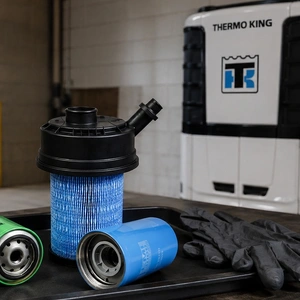
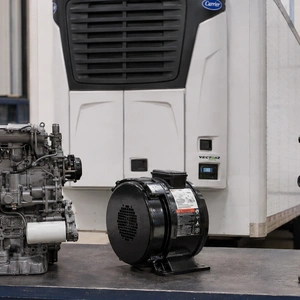
Industries Served by Reefer Maintenance Contracts

Food distributors, pharmaceutical carriers, produce transporters, and retail supply chains rely on refrigeration fleet PM contracts to meet regulatory and operational mandates. From FSMA to GDP, uptime and documentation are inseparable from compliance. Maintenance agreements enable year-round readiness and help logistics providers differentiate with cold chain integrity.

PM Planning and Execution Tools Behind the Process

Maintenance contracts integrate with fleet management systems and telematics to automate PM scheduling based on actual unit runtime. Service teams use calibrated tools to verify refrigerant charge, compressor load balance, electrical integrity, and belt conditions. Data is fed into central logs, creating traceable histories for audits, warranty claims, and equipment valuation assessments.

Long Term Benefits for Logistics Operations

Contracted reefer servicing reduces in-route repair risks, improves DOT compliance readiness, and ensures consistent thermal performance. By spreading PM costs over the contract term, fleet operators gain financial predictability and avoid reactive repair premiums. Moreover, well-maintained refrigeration units experience fewer fuel inefficiencies and reduced emissions, aligning with both operational and sustainability objectives.

Move from Reactive to Preventative on Contract

Every reefer downtime event avoided strengthens delivery reliability and protects the bottom line. With contract-based refrigeration maintenance, logistics and distribution fleets shift from reactive firefighting to strategic asset management. Our programs deliver compliance, cost control, and complete visibility—fleet-wide.
Reefer Maintenance Agreement Questions for Logistics and Distribution Operators

What does a maintenance agreement actually define beyond scheduled visits?

Which units are covered, what triggers a service event, what each visit includes, what documentation is produced, and how work found during a visit is authorised. Triggers can be runtime, calendar, or fault-driven rather than purely by date. Without those definitions an agreement is a booking arrangement rather than a program.

Which factors shape the structure of an agreement for a given operation?

Unit count and platform mix, how the assets are used, where they can be reached and during which windows, and how much documentation the operation has to produce. A single-depot fleet on predictable routes structures differently from assets spread across drop yards. Duty cycle sets the interval before anything else does.

How does onboarding a fleet onto an agreement usually begin?

With a technical audit of the actual assets: models and controller generations, accumulated runtime, current condition, location coverage, and whatever maintenance history exists. Service scopes and intervals are set from that rather than from a standard template. Skipping the audit means the first year is spent discovering what the fleet contains.

Why does contracted maintenance behave differently from booking each visit?

Because the scheduling stops depending on someone remembering. Service events are triggered by the agreed rule and the record accumulates in one place, so trends across the fleet become visible. Ad hoc booking tends to serve the units someone happens to notice, which is rarely the same set that needs attention.

Is there work a maintenance agreement deliberately leaves outside its scope?

Yes, and the boundary keeps the agreement predictable. Corrective repair arising from findings, emergency attendance, component replacement beyond consumables, and trailer body work all sit outside and are authorised separately as they arise. An agreement that quietly absorbs repair work stops being predictable for either side, which defeats the reason for having one.

What a Reefer Preventive Maintenance Checklist Includes

A complete reefer PM checklist records unit identity, condition, operating evidence, corrective priorities and the basis for returning the asset to service.

Critical Reefer Components and Their Preventative Care Routines

Protect your fleet from unexpected failures with structured maintenance routines. Discover how focusing on the most critical components helps reduce downtime, extend equipment life, and support on-time deliveries in high-demand logistics operations.

How Preventative Maintenance Reduces Reefer Downtime and Costs

Keep your fleet moving without interruptions. Discover proven strategies to reduce downtime, control costs, and extend the service life of refrigerated trailers through preventive maintenance. Every hour saved on the road means higher reliability and fewer emergency repairs.

Reefer Maintenance Logs and Audit-Ready Records

Reefer maintenance records should show what was inspected, what evidence was found, what changed and what remains open for each identified unit.

Cold Chain Compliance Through Preventative Reefer Maintenance

Ensure regulatory compliance and cargo integrity with targeted cold chain maintenance. Prevent shipment failures and protect sensitive goods through proactive service plans designed for time-critical refrigerated transport. Reliable, audit-ready, and built for high-stakes logistics.

Using Technology to Track and Manage Reefer PM Services

Digitize your reefer maintenance process with automated tracking and predictive insights. Eliminate manual scheduling errors, reduce unplanned downtime, and gain full control over service intervals across your fleet. Scalable, precise, and built for logistics operations that demand consistency.

Mobile Preventive Reefer Maintenance for Fleets

Mobile PM can reduce asset movement when the yard supports safe access and the work can be completed and verified without shop-only equipment.

Preventative Reefer Maintenance Strategy for Fleet Managers and Dispatchers

Fleet performance starts with smart planning. Discover how preventative maintenance strategies aligned with dispatch priorities can help avoid reefer downtime, reduce emergency calls, and extend the service life of critical refrigeration assets across your entire operation.

Call us: (312) 680 4033