Transport Refrigeration Chicagoland

How Preventative Maintenance Reduces Reefer Downtime and Costs

Keep your fleet moving without interruptions. Discover proven strategies to reduce downtime, control costs, and extend the service life of refrigerated trailers through preventive maintenance. Every hour saved on the road means higher reliability and fewer emergency repairs.

Carrier & Thermo KingReefer · TRU · APU service
EPA 608 Type II CertifiedRecovery & recharge
Licensed & InsuredCOI & additional insured
24/7 Illinois-Wide RoadsideEvery major freight corridor
Failure History and Downtime Review

Failure History and Downtime Review

Repair events, roadside calls, alarm recurrence, idle time, and repeated component findings are analyzed to show where planned work can reduce exposure.

High Risk Unit Identification

High Risk Unit Identification

Age, utilization, route demand, seasonal load, and unresolved findings are used to rank units that deserve earlier preventive attention.

Preseason Readiness Service

Preseason Readiness Service

Cooling performance, starting reliability, airflow, power supply, fuel delivery, and control history are checked before peak operating conditions arrive.

Planned Wear Component Replacement

Planned Wear Component Replacement

Confirmed wear items are scheduled for replacement during controlled service windows instead of waiting for failure during a load.

Repeat Fault Prevention Review

Repeat Fault Prevention Review

Recurring alarms and comeback repairs are traced across maintenance records to identify scope gaps that routine checklist work may miss.

Uptime Focused PM Closeout

Uptime Focused PM Closeout

Each visit ends with completed work, remaining risk, operating verification, and a defined follow up point for fleet planning.

Fleet Level Maintenance Strategies and Cost Allocation

For multi-unit operators, the value of PM scales with volume. Service coordination across a reefer fleet allows for batch maintenance, consistent parts stocking, and unified diagnostics reporting. We help build cost models that account for service frequency, part replacement cycles, and seasonal variations—providing clear visibility into total maintenance spend and cost per mile metrics.

Refrigerated Trailer PM the Foundation of Uptime

Refrigerated trailer preventative maintenance (PM) programs address mechanical risks before they escalate. Scheduled inspections and service intervals minimize emergency calls, reduce fault codes, and extend component lifespan. A structured PM checklist targets critical systems—compressor, belts, condenser coils, fuel delivery, and battery health—ensuring stable operation under varying seasonal demands and cargo types.

Start Reducing Reefer Downtime Today

If you operate temperature-sensitive logistics, every hour of reefer uptime counts. Let us structure a preventative maintenance program that aligns with your routes, fleet composition, and delivery schedules. Reduce risk, protect cargo, and gain cost control—backed by professional diagnostics, real-world experience, and scalable fleet support.
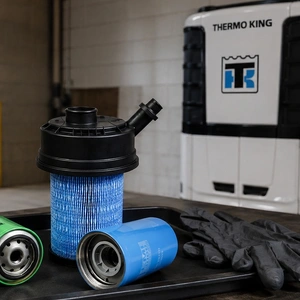
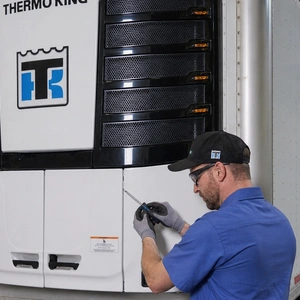
Reefer Downtime Prevention Checklist Operational Discipline

Effective PM begins with a checklist that aligns with manufacturer standards and field realities. This includes pre-trip diagnostics, active code scans, refrigerant integrity checks, airflow verification, fuel quality inspection, and backup battery load testing. Applied systematically, this routine detects degradation patterns early and supports data-driven maintenance decisions at the fleet level.

A refrigeration unit failure in the middle of a delivery can mean more than lost cargo—it can trigger penalties, spoilage claims, and costly rescheduling. Unplanned reefer downtime puts pressure on logistics teams and erodes customer trust. In high-frequency distribution, even one incident can ripple across multiple loads, affecting the entire supply chain.

Refrigerated Trailer PM: The Foundation of Uptime

Refrigerated trailer preventative maintenance (PM) programs address mechanical risks before they escalate. Scheduled inspections and service intervals minimize emergency calls, reduce fault codes, and extend component lifespan. A structured PM checklist targets critical systems—compressor, belts, condenser coils, fuel delivery, and battery health—ensuring stable operation under varying seasonal demands and cargo types.

Reefer Downtime Prevention Checklist: Operational Discipline

Effective PM begins with a checklist that aligns with manufacturer standards and field realities. This includes pre-trip diagnostics, active code scans, refrigerant integrity checks, airflow verification, fuel quality inspection, and backup battery load testing. Applied systematically, this routine detects degradation patterns early and supports data-driven maintenance decisions at the fleet level.

Reducing Reefer Failure Risk with Targeted Interventions

Failure modes in reefer units often stem from predictable sources—loose belt tension, contaminated fuel, electrical shorts, or clogged filters. Addressing these through regular service intervals significantly lowers the probability of critical events. Our protocols focus on preemptive part replacement and sensor recalibration, especially ahead of seasonal load peaks, ensuring readiness across temperature-controlled assets.

Maximizing Reefer Uptime through Predictive Analytics

Uptime optimization is not reactive—it requires predictive insights. Using historical service records, real-time fault logs, and runtime analytics, our technicians tailor the PM frequency to actual asset performance. This approach helps avoid over-servicing while maintaining safety margins. The result is higher equipment availability, improved dispatch confidence, and lower lifecycle costs.

Reefer ROI: Tangible Savings from Consistent PM

Every unplanned reefer failure introduces unbudgeted costs: overtime labor, emergency recovery, potential claim payouts, and customer disruption. Preventative maintenance reduces these incidents, translating into measurable ROI. A disciplined PM program extends compressor life, delays capital replacement, and minimizes temperature excursions that would otherwise trigger loss claims.

Fleet-Level Maintenance Strategies and Cost Allocation

For multi-unit operators, the value of PM scales with volume. Service coordination across a reefer fleet allows for batch maintenance, consistent parts stocking, and unified diagnostics reporting. We help build cost models that account for service frequency, part replacement cycles, and seasonal variations—providing clear visibility into total maintenance spend and cost per mile metrics.

Closing the Loop: Implementing Your PM Strategy

Transitioning from reactive repairs to preventative maintenance requires structured execution and partner alignment. We provide tailored PM plans that match your fleet usage profile, regional climate exposure, and load type volatility. Our certified technicians ensure checklist compliance, document each service event, and support fleet uptime through measurable KPIs.

Start Reducing Reefer Downtime Today

If you operate temperature-sensitive logistics, every hour of reefer uptime counts. Let us structure a preventative maintenance program that aligns with your routes, fleet composition, and delivery schedules. Reduce risk, protect cargo, and gain cost control—backed by professional diagnostics, real-world experience, and scalable fleet support.
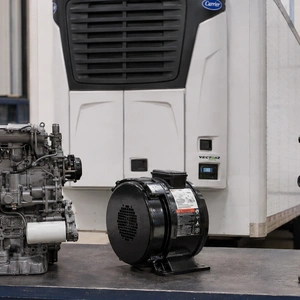
Reefer ROI Tangible Savings from Consistent PM

Every unplanned reefer failure introduces unbudgeted costs: overtime labor, emergency recovery, potential claim payouts, and customer disruption. Preventative maintenance reduces these incidents, translating into measurable ROI. A disciplined PM program extends compressor life, delays capital replacement, and minimizes temperature excursions that would otherwise trigger loss claims.

Pressure Temperature Relationships Behind How Preventative Maintenance

A refrigeration unit failure in the middle of a delivery can mean more than lost cargo—it can trigger penalties, spoilage claims, and costly rescheduling. Unplanned reefer downtime puts pressure on logistics teams and erodes customer trust. In high-frequency distribution, even one incident can ripple across multiple loads, affecting the entire supply chain.

Closing the Loop Implementing Your PM Strategy

Transitioning from reactive repairs to preventative maintenance requires structured execution and partner alignment. We provide tailored PM plans that match your fleet usage profile, regional climate exposure, and load type volatility. Our certified technicians ensure checklist compliance, document each service event, and support fleet uptime through measurable KPIs.

Reducing Reefer Failure Risk with Targeted Interventions

Failure modes in reefer units often stem from predictable sources—loose belt tension, contaminated fuel, electrical shorts, or clogged filters. Addressing these through regular service intervals significantly lowers the probability of critical events. Our protocols focus on preemptive part replacement and sensor recalibration, especially ahead of seasonal load peaks, ensuring readiness across temperature-controlled assets.

Downtime and Cost Drivers Behind Reefer Preventive Maintenance Programs

How does an unplanned failure cost more than the repair itself?

The repair is the smallest part. A unit down mid-route brings recovery arrangements, a load at risk, a delivery window missed, and downstream disruption to whatever that trailer was scheduled for next. A planned visit consumes a known slot in the yard. The difference is disruption, not labour hours.

Which failure modes are the most predictable and therefore most preventable?

Belt tension and wear, contaminated or restricted fuel, degraded electrical connections, loaded filters, and sensor drift. Each follows a trajectory rather than failing without warning. Those are the items where a measured baseline and a repeat reading catch the movement while it is still a scheduling decision.

When does frequent servicing stop adding value to a fleet?

Once intervals are shorter than the rate at which anything actually changes. Servicing a stable unit repeatedly consumes capacity that a struggling asset needs, and it adds handling risk without a corresponding finding. Recorded history is what shows where an interval can safely lengthen and where it must tighten.

What does fleet-level coordination add over servicing units individually?

Batching, consistent parts stocking, and comparable diagnostics across assets. Servicing a group at one location reduces repeated setup time and makes it possible to compare units running the same routes under the same conditions. That comparison is how an outlier gets identified well before it becomes the emergency call nobody planned for.

Are there failures a maintenance program will never prevent?

Yes, and saying so honestly matters. Damage, component defects, and sudden faults that arrive with no preceding trend all remain possible. Preventive work narrows the range of failures that surprise an operation rather than eliminating them. A program presented as removing breakdowns entirely is describing something no maintenance regime has ever delivered.

What a Reefer Preventive Maintenance Checklist Includes

A complete reefer PM checklist records unit identity, condition, operating evidence, corrective priorities and the basis for returning the asset to service.

Reefer Maintenance Contracts for Logistics and Distribution Fleets

Reliable refrigeration means uninterrupted logistics. Discover how planned service agreements help reduce fleet risks, extend equipment lifespan and stabilize your cold chain performance with structured, contract-based maintenance.

Critical Reefer Components and Their Preventative Care Routines

Protect your fleet from unexpected failures with structured maintenance routines. Discover how focusing on the most critical components helps reduce downtime, extend equipment life, and support on-time deliveries in high-demand logistics operations.

Reefer Maintenance Logs and Audit-Ready Records

Reefer maintenance records should show what was inspected, what evidence was found, what changed and what remains open for each identified unit.

Cold Chain Compliance Through Preventative Reefer Maintenance

Ensure regulatory compliance and cargo integrity with targeted cold chain maintenance. Prevent shipment failures and protect sensitive goods through proactive service plans designed for time-critical refrigerated transport. Reliable, audit-ready, and built for high-stakes logistics.

Using Technology to Track and Manage Reefer PM Services

Digitize your reefer maintenance process with automated tracking and predictive insights. Eliminate manual scheduling errors, reduce unplanned downtime, and gain full control over service intervals across your fleet. Scalable, precise, and built for logistics operations that demand consistency.

Mobile Preventive Reefer Maintenance for Fleets

Mobile PM can reduce asset movement when the yard supports safe access and the work can be completed and verified without shop-only equipment.

Preventative Reefer Maintenance Strategy for Fleet Managers and Dispatchers

Fleet performance starts with smart planning. Discover how preventative maintenance strategies aligned with dispatch priorities can help avoid reefer downtime, reduce emergency calls, and extend the service life of critical refrigeration assets across your entire operation.

Call us: (312) 680 4033