Transport Refrigeration Chicagoland

Critical Reefer Components and Their Preventative Care Routines

Protect your fleet from unexpected failures with structured maintenance routines. Discover how focusing on the most critical components helps reduce downtime, extend equipment life, and support on-time deliveries in high-demand logistics operations.

Carrier & Thermo KingReefer · TRU · APU service
EPA 608 Type II CertifiedRecovery & recharge
Licensed & InsuredCOI & additional insured
24/7 Illinois-Wide RoadsideEvery major freight corridor
Compressor Condition Trending

Compressor Condition Trending

Operating sound, vibration, oil condition, cooling response, and failure history are reviewed for changes that can signal developing compressor risk.

Battery and Charging System Maintenance

Battery and Charging System Maintenance

Battery load capacity, terminals, cables, grounds, alternator support, and startup voltage are serviced before weak power causes a route failure.

Fuel Delivery System Preventive Service

Fuel Delivery System Preventive Service

Filters, lines, fittings, water separation, leaks, and engine fuel behavior are checked to reduce avoidable no start and shutdown events.

Belt Tension and Drive Inspection

Belt Tension and Drive Inspection

Drive belts, pulleys, tension, alignment, and wear patterns are assessed and corrected before a damaged drive interrupts refrigeration.

Sensor Calibration and Control Check

Sensor Calibration and Control Check

Temperature and control inputs are compared with independent readings so drift or unstable feedback can be addressed during planned service.

Coil Cleaning and Airflow Restoration

Coil Cleaning and Airflow Restoration

Condenser and evaporator surfaces, fans, drains, and obstructions are serviced to restore heat exchange and reduce unnecessary compressor load.

Reefer Filter Replacements and Belt Inspections

Clogged air or oil filters reduce compressor efficiency and elevate internal temperatures. Each preventative visit includes element removal, contamination check, and seal inspection. Belts are reviewed for tension, alignment, and signs of fraying — a snapped belt is one of the most frequent roadside TRU failures and entirely preventable with routine monitoring.

Routine Reefer Diagnostics as a Standard Preventative Measure

We treat every PM service as a technical scan — not a quick inspection. Our teams log performance data, compare it to unit baselines, and flag trends that indicate internal wear. Over time, this data guides rebuild planning and parts staging, helping large fleets avoid reactive service calls and optimize uptime across all lanes.

Electrical System Service Cables, Relays, and Control Boards

Reefer electrical faults often manifest in the worst conditions — startup failures during overnight hauls or sensor losses mid-route. During PMs, we perform continuity tests across battery circuits, inspect terminal corrosion, test relay response times, and verify controller diagnostics. Software logs are downloaded and compared against baseline fault trends to flag declining system health.

Reefer Compressor Maintenance and Diagnostics

The compressor is the heart of any TRU, and its service interval should never be guessed. Preventative care includes refrigerant charge testing, suction pressure analysis, vibration pattern reading, and oil viscosity checks. We also record runtime hours against manufacturer thresholds to identify units approaching fatigue thresholds and recommend preemptive replacements before failure.

Unexpected breakdowns in refrigerated trailers often stem from overlooked wear in high-stress components — compressor faults, degraded wiring, clogged filters, or erratic fuel delivery. These failures delay shipments and jeopardize temperature-sensitive cargo.

Preventative Reefer Maintenance Focused on Key System Components

Our service model targets the most failure-prone parts of refrigeration units through component-specific maintenance routines. Each PM visit follows a structured checklist that addresses electrical, mechanical, and fuel-related systems to catch faults before they disrupt fleet operations.

Why Targeted Component Care Matters for Reefer Units

Unlike general inspections, component-focused care ensures each part functions within its optimal range. Compressors operate under high pressure and temperature; even minor refrigerant or oil issues can lead to system shutdown. Electrical harnesses face constant vibration, making early wire damage hard to detect without scheduled testing. Fuel system inefficiencies silently increase consumption and carbon buildup, while neglected filters and belts trigger poor airflow and temperature variance.

Reefer Compressor Maintenance and Diagnostics

The compressor is the heart of any TRU, and its service interval should never be guessed. Preventative care includes refrigerant charge testing, suction pressure analysis, vibration pattern reading, and oil viscosity checks. We also record runtime hours against manufacturer thresholds to identify units approaching fatigue thresholds and recommend preemptive replacements before failure.

Electrical System Service: Cables, Relays, and Control Boards

Reefer electrical faults often manifest in the worst conditions — startup failures during overnight hauls or sensor losses mid-route. During PMs, we perform continuity tests across battery circuits, inspect terminal corrosion, test relay response times, and verify controller diagnostics. Software logs are downloaded and compared against baseline fault trends to flag declining system health.

Battery Health Checks in Reefer Preventative Maintenance

Battery diagnostics go beyond voltage. Our routine includes load testing under compressor start-up demand, alternator output verification, and cable resistance tracking. Corroded clamps or low cycle ratings are proactively replaced. Batteries that fall below cold-cranking standards are marked for swap, avoiding trailer dead-outs in staging zones.

Fuel System Checks for Diesel-Powered Units

Diesel-powered reefers rely on consistent fuel delivery. Clogged injectors, air leaks, or algae buildup inside tanks can quietly cause lean burn conditions. We pressure-test fuel lines, inspect return valves, replace filters on schedule, and monitor diesel pump performance. Water separator condition is reviewed to avoid contamination-related shutdowns.

Reefer Filter Replacements and Belt Inspections

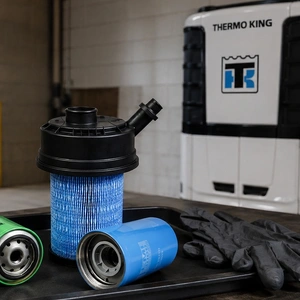
Clogged air or oil filters reduce compressor efficiency and elevate internal temperatures. Each preventative visit includes element removal, contamination check, and seal inspection. Belts are reviewed for tension, alignment, and signs of fraying — a snapped belt is one of the most frequent roadside TRU failures and entirely preventable with routine monitoring.

Thermal Sensors and Condenser Coil Cleaning

Sensor drift is common in older reefer units, causing inaccurate temperature readings. PM routines include sensor calibration, insulation inspection, and signal check. Condenser coils are cleaned with non-corrosive agents to maintain airflow efficiency and prevent overloading the compressor.

Routine Reefer Diagnostics as a Standard Preventative Measure

We treat every PM service as a technical scan — not a quick inspection. Our teams log performance data, compare it to unit baselines, and flag trends that indicate internal wear. Over time, this data guides rebuild planning and parts staging, helping large fleets avoid reactive service calls and optimize uptime across all lanes.

Proactive Scheduling Means Fewer Roadside Failures

By aligning service routines with real usage patterns — seasonal routes, fuel type, cargo sensitivity — our preventative care reduces unscheduled stops by over 70 percent. Units are returned to service faster, with components tuned to perform at manufacturer-grade levels under real-world load cycles.

Ensure your refrigeration units perform consistently across all routes. Schedule a preventative maintenance session focused on component reliability. Ask for a service breakdown customized to your reefer models and fleet demands.
Preventative Reefer Maintenance Focused on Key System Components

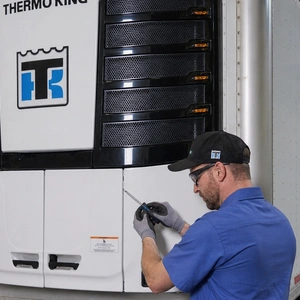
Our service model targets the most failure-prone parts of refrigeration units through component-specific maintenance routines. Each PM visit follows a structured checklist that addresses electrical, mechanical, and fuel-related systems to catch faults before they disrupt fleet operations.

Battery Health Checks in Reefer Preventative Maintenance

Our routine includes load testing under compressor start-up demand, alternator output verification, and cable resistance tracking. Corroded clamps or low cycle ratings are proactively replaced. Batteries that fall below cold-cranking standards are marked for swap, avoiding trailer dead-outs in staging zones.

Why Targeted Component Care Matters for Reefer Units

Unlike general inspections, component-focused care ensures each part functions within its optimal range. Compressors operate under high pressure and temperature; even minor refrigerant or oil issues can lead to system shutdown. Electrical harnesses face constant vibration, making early wire damage hard to detect without scheduled testing.

Thermal Sensors and Condenser Coil Cleaning

Sensor drift is common in older reefer units, causing inaccurate temperature readings. PM routines include sensor calibration, insulation inspection, and signal check. Condenser coils are cleaned with non-corrosive agents to maintain airflow efficiency and prevent overloading the compressor.

Component-Level Preventive Care Questions for Transport Refrigeration Units

What does preventive attention to the compressor involve on a running unit?

Charge condition and suction pressure behaviour, oil condition, vibration compared against earlier readings, and accumulated runtime measured against the manufacturer threshold for that model. Those four together describe whether the compressor is ageing normally or moving toward fatigue. Runtime on its own says very little without the operating measurements recorded beside it.

How is battery assessment different from simply reading voltage?

Voltage at rest tells you almost nothing about a battery under starting load. Assessment means load testing against the demand the unit actually places on it, verifying alternator output while running, and checking cable resistance and terminal condition. A battery that reads acceptable at rest and collapses under load is the common failure.

When do fuel system problems start affecting a diesel unit invisibly?

Long before a stall. Partially restricted filters, air drawn at a loose fitting, water accumulating past the separator, and injector deposits all degrade combustion quality while the unit still runs. That shows as harder starting and reduced output rather than as a fault, which is why the fuel side is inspected on schedule rather than on complaint.

Which wear items most often cause an avoidable roadside failure?

Belts, filters, and electrical connections. A belt that fails on the road strands a unit that had been showing fraying and slack for weeks. Loaded filters raise operating temperature and starve the compressor. Corroded terminals and chafed harness runs create intermittent faults that look like component failures until the circuit is traced.

Why are sensors and condenser coils grouped into the same routine?

Both control what the unit believes about its own condition. A drifting sensor makes the controller act on wrong information, producing nuisance alarms and unnecessary cycles. A fouled condenser coil raises head pressure and loads the compressor. Neither announces itself, and both distort every other reading taken on the unit.

What a Reefer Preventive Maintenance Checklist Includes

A complete reefer PM checklist records unit identity, condition, operating evidence, corrective priorities and the basis for returning the asset to service.

Reefer Maintenance Contracts for Logistics and Distribution Fleets

Reliable refrigeration means uninterrupted logistics. Discover how planned service agreements help reduce fleet risks, extend equipment lifespan and stabilize your cold chain performance with structured, contract-based maintenance.

How Preventative Maintenance Reduces Reefer Downtime and Costs

Keep your fleet moving without interruptions. Discover proven strategies to reduce downtime, control costs, and extend the service life of refrigerated trailers through preventive maintenance. Every hour saved on the road means higher reliability and fewer emergency repairs.

Reefer Maintenance Logs and Audit-Ready Records

Reefer maintenance records should show what was inspected, what evidence was found, what changed and what remains open for each identified unit.

Cold Chain Compliance Through Preventative Reefer Maintenance

Ensure regulatory compliance and cargo integrity with targeted cold chain maintenance. Prevent shipment failures and protect sensitive goods through proactive service plans designed for time-critical refrigerated transport. Reliable, audit-ready, and built for high-stakes logistics.

Using Technology to Track and Manage Reefer PM Services

Digitize your reefer maintenance process with automated tracking and predictive insights. Eliminate manual scheduling errors, reduce unplanned downtime, and gain full control over service intervals across your fleet. Scalable, precise, and built for logistics operations that demand consistency.

Mobile Preventive Reefer Maintenance for Fleets

Mobile PM can reduce asset movement when the yard supports safe access and the work can be completed and verified without shop-only equipment.

Preventative Reefer Maintenance Strategy for Fleet Managers and Dispatchers

Fleet performance starts with smart planning. Discover how preventative maintenance strategies aligned with dispatch priorities can help avoid reefer downtime, reduce emergency calls, and extend the service life of critical refrigeration assets across your entire operation.

Call us: (312) 680 4033