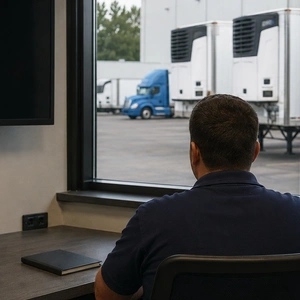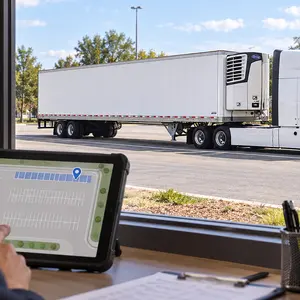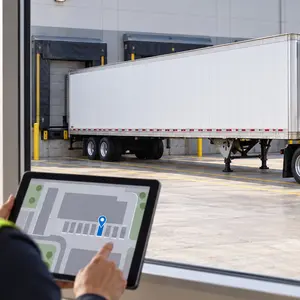


A trailer refrigeration problem can surface anywhere on a logistics property. The unit may be reported at an inbound checkpoint, discovered during a dwell period, moved near a dock, or held in outbound staging. The address alone does not tell a mobile technician where the trailer is, who controls it, or when the surrounding operation can safely release enough space for service.
Warehouse and distribution center reefer repair therefore begins with coordination. The work still concerns the Thermo King or Carrier unit mounted on the trailer. Facility access, custody, trailer location, operating history and an agreed service window determine whether useful diagnosis can begin without disrupting traffic or losing the evidence tied to the complaint.
Identify the facility and the correct service entrance
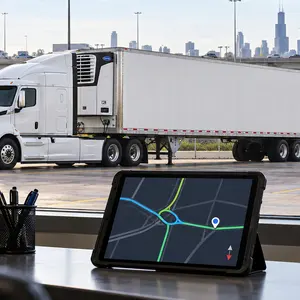
Large properties may have separate entrances for employees, inbound carriers, vendors and service vehicles. Send the complete street address, the approved service entrance, gate hours and any check-in instruction supplied by the facility. A map pin should mark the gate rather than the center of the building.
Advise security or receiving personnel that a mobile reefer technician is expected. If identification, a work order number, insurance documentation or an escort is required, arrange it before arrival. Access rules belong to the property and can differ from one distribution center to another.
Name the people responsible for access and equipment custody
One contact should represent the trailer or fleet, and another should be available for facility decisions when those responsibilities are separate. The fleet contact confirms the asset, complaint and operating priority. The facility contact controls entry, work-area approval and local traffic restrictions.
Record who can authorize a trailer move, provide controller keys and confirm where the unit may be serviced. A driver may know the history. A guard may admit the service vehicle but not release the trailer. The handoff is clearer when these roles are established before work starts.
Track the trailer as it moves through the property
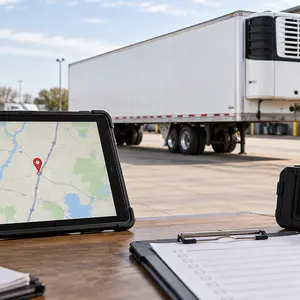
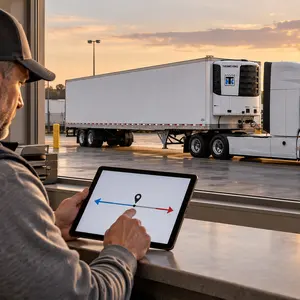
A trailer number without a current position is not enough. Give the asset ID plus its present zone: inbound holding, a numbered door, overflow parking, inspection lane, service staging or outbound queue. Update the technician if a yard tractor moves it after dispatch.
The exact location matters because the same trailer can cross several operating zones during one shift. At the final work position, the technician identifies it again by trailer number, refrigeration-unit manufacturer, data plate and the current zone supplied by the responsible contact. This prevents a stale door assignment or yesterday's parking row from sending service to the wrong asset.
Choose a service window around the facility's real traffic
Receiving waves, outbound cutoffs, shift changes and yard-tractor routes can make an otherwise open area unsuitable for repair. The facility should identify a period when the trailer can remain stationary and the immediate front-wall area can be protected from normal traffic. The available window is an operating constraint, not an estimate of how long the repair will take.
If the window closes before the fault is confirmed, the closeout should preserve the completed checks and the next required step. Rushing past verification to match a dock schedule can turn an intermittent problem into another unresolved departure.
Move the trailer to a controlled service position when needed
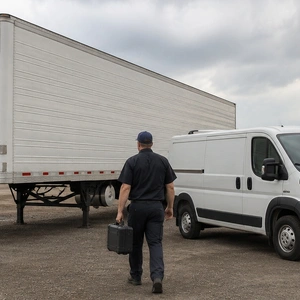
Direct work beside an active dock door is not assumed. When the property can provide a marked service pull-off, inspection lane or other stable staging position, authorized personnel may move and secure the trailer there. The selected area needs safe footing, suitable lighting and clearance around the front-mounted unit.
The mobile technician does not direct general yard traffic or operate the facility's tractor as part of repair. Movement remains under the site's rules. Cones can define the immediate work boundary, while the facility keeps trucks, lift equipment and pedestrians outside it.
Confirm front-wall clearance before opening the unit
A tractor fairing, close-coupled cab, fence, parked trailer or fixed barrier may restrict access to a front-wall refrigeration unit. Send a wide photograph showing the complete trailer front and its surroundings. If more clearance is required, the responsible site or fleet personnel decide how the equipment will be repositioned.
The trailer must be stationary and secured before covers are opened. Service covers are not work platforms, and employees should not open them for intake photographs. Exterior images are sufficient to confirm the mounting arrangement and prepare for access.
Preserve the complaint through shift and custody changes
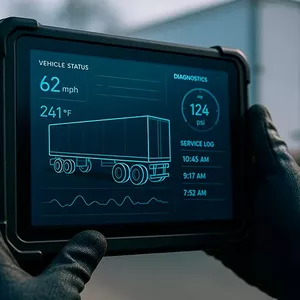
The person who noticed the problem may be gone by the time the technician reaches the trailer. Record when the complaint started, who observed it and what changed immediately beforehand. Include the setpoint, displayed box temperature, operating mode, alarm image and whether the unit started, stopped, restarted or continued running without the expected response.
Do not clear alarms or cycle power merely to make the display look normal. If someone already attempted a restart or changed a setting, report the action and time. A short event history is more useful than a message that says only that the reefer is not working.
Use exact Thermo King or Carrier unit identification
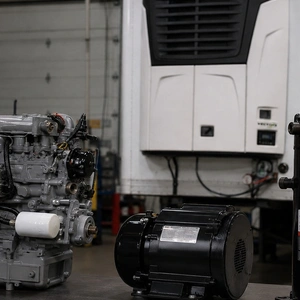
Photograph the complete front-wall installation and the manufacturer's data plate. Provide the Thermo King or Carrier model, serial number, controller family and the fleet's trailer identifier. Similar outer housings do not establish identical configuration, software, wiring or component requirements.
Identity helps preparation. Alarm text and controller behavior are interpreted with the observed operating condition. Replacement parts are matched only after the relevant failure and fitment have been confirmed.
Keep transport refrigeration separate from building systems
This service scope is the transport refrigeration unit attached to the trailer. It does not include warehouse HVAC, cold-storage rooms, rack systems, dock equipment, electrical distribution for the building or facility automation. A problem noticed on warehouse property does not automatically become a building-refrigeration assignment.
If the complaint may involve a facility power connection, site personnel should identify the approved connection and the party responsible for it. The mobile technician evaluates the trailer unit within the authorized scope and documents any boundary that requires the facility's own contractor or maintenance team.
Diagnosis follows the equipment evidence, not the property type
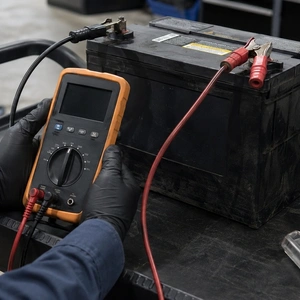
A unit that will not start, stops repeatedly, shows an alarm or loses temperature response still requires an evidence-based diagnostic path. The warehouse environment changes access and timing, not the technical meaning of the symptoms. Electrical supply, control inputs, starting behavior, airflow, fuel delivery and refrigeration performance are evaluated only as the findings require.
Technicians do not infer a component failure from one alarm code or from another trailer's repair history. When the fault is intermittent, the operating sequence and event timing may be more valuable than a single reading captured after the condition disappears.
Field completion depends on fault, access and approved scope
Some diagnostic and corrective work can be completed at the facility when the work position remains controlled and the necessary tools and confirmed parts are available. Other repairs may require major component access, extended observation, fabrication or a shop environment. No property type creates a blanket same-visit completion guarantee.
If service cannot continue on site, the visit should still produce a useful decision. Findings identify what was verified, why the unit remains restricted and which condition, part or repair setting is needed next. The fleet and facility then coordinate movement according to their own custody and operating procedures.
Document the trailer handoff before it changes zones
The closeout belongs to the exact trailer and refrigeration unit. It records the reported complaint, inspection findings, work performed, alarm status and final operating observation. It also states whether the unit is complete, temporarily restored, waiting for an approved part, referred for controlled repair or still under diagnosis.
Share that status with the named fleet contact and, where appropriate, the facility contact who controls the next movement. Equipment status does not certify cargo condition or release a load. Product disposition and route decisions remain with the responsible carrier, shipper, receiver and fleet personnel.
Warehouse and distribution center service intake
- Property access: full address, correct gate, check-in rule, gate hours and facility contact.
- Trailer custody: fleet contact, movement authority, keys and any required escort.
- Current position: asset number, present zone, location pin and immediate update after a move.
- Work window: approved staging area, current traffic restriction, available stationary period, suitable lighting and the contact who can extend or close that window.
- Unit identity: manufacturer, exact model, serial number, controller family and readable data-plate photograph.
- Operating evidence: symptom, event time, setpoint, displayed temperature, mode, alarm image and actions already attempted.
- Operational context: loaded or empty status, next planned movement and the person who will receive the closeout.
Send changes before arrival. A current location and an available decision-maker often prevent more delay than an extra description of the same symptom.
Illinois coverage and planned fleet assignments
Illinois is the primary service area. Coordination is based on the actual warehouse or distribution-center location, access requirements, technician availability and the operating window provided for the trailer. Arrival timing cannot be identical across the state or assumed from the facility's distance alone.
Planned assignments for fleet equipment in nearby states, including Indiana, may be arranged when travel, site access and work scope are agreed in advance. These are coordinated fleet visits. They do not establish automatic emergency coverage outside Illinois.
Chicago-area warehouses and distribution centers elsewhere in Illinois require facility-approved access before transport refrigeration work begins.