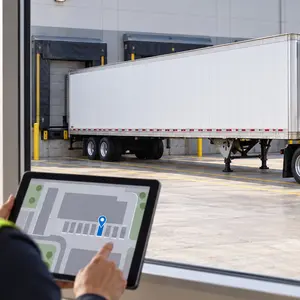


I-80 carries refrigerated freight east and west across Illinois through long open-road sections and a heavily traveled freight belt around Joliet and Will County. A reefer failure on that route cannot be dispatched from a highway number alone. The service team needs to know which direction the trailer is moving, which side of an interchange it occupies and whether the current position allows safe access to the refrigeration unit.
Ustarshah coordinates mobile service for Thermo King and Carrier trailer units at Illinois I-80 locations. The service boundary is Illinois; the page does not claim uniform arrival times from the Iowa line to Indiana or coverage beyond the state. Each call is planned from the live location, road conditions, safe parking, technician availability and the work the unit appears to require.
Eastbound or westbound belongs in the first message
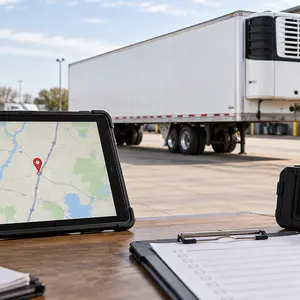
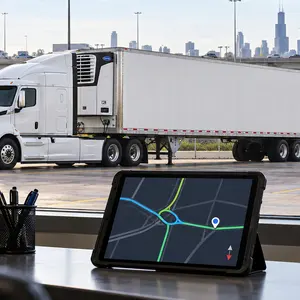
Direction is essential on an east-west corridor. Start with it. Then send the nearest exit or mile marker and a location pin. When the driver is at a truck stop, rest area, customer site or ramp, name that place and describe where the trailer is parked on the property.
A pin without written context can place a responder across a median or on an inaccessible frontage road. A city name can be equally vague when the trailer is several exits away. A short written location backed by a pin gives dispatch a position that can be checked before travel begins.
Open-road distance and freight-zone congestion create different delays
Western and central Illinois can put long distance between suitable service locations. Around Joliet and Will County, a different constraint appears: congestion, merging, construction activity and complex interchange access can consume more time than the final miles to the trailer. IDOT identifies this part of I-80 as a major corridor with substantial truck traffic and ongoing infrastructure work.
Conditions change quickly. Check current construction and road information through official traveler resources when the call is placed, because a saved lane closure or old detour is not a reliable dispatch instruction. Any arrival estimate remains conditional on the route that is actually open and the technician's real starting point.
Move the trailer out of live traffic when possible
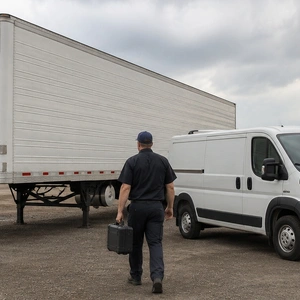
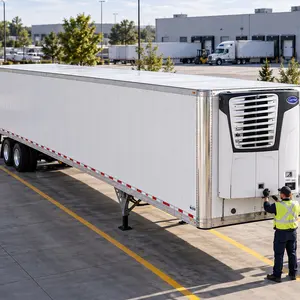
A refrigeration unit mounted on the trailer front wall needs working clearance. The technician may need to stand beside the tractor-trailer connection, open exterior panels or position diagnostic equipment. A narrow shoulder beside high-speed traffic rarely provides the conditions of a normal service bay.
If the unit still runs and the vehicle can move safely, the fleet may choose a protected truck parking area before service begins. If movement is not possible, follow law-enforcement and roadway-safety direction. Towing, traffic control and cargo transfer remain separate responsibilities and are not represented as parts of the refrigeration repair.
Record the unit state before changing it
Photograph the controller, visible alarm and displayed temperature before clearing codes or cycling power. Report whether the unit is running continuously, shutting down, attempting to start or entirely unresponsive. Include the setpoint and the direction of the temperature trend, not only the current number.
A fault that appeared after hours of steady westbound travel has a different history from a no-start discovered after a stop. Door activity, loading time, fuel stop, standby use and recent service can all help explain the sequence. They guide the first test without creating a remote parts diagnosis.
Thermo King and Carrier calls require exact identification
Send the make, model, serial number, controller family and trailer asset number. Thermo King and Carrier equipment perform similar transport refrigeration tasks, yet their controllers, alarm definitions and detailed service procedures remain platform-specific. A code remembered from another unit should not be applied to the trailer on I-80.
A full exterior photograph establishes the housing and front-wall installation. A close photograph of the data plate provides the identification used for technical information and parts selection. Drivers should not remove covers at an exposed roadside position to obtain internal images.
Temperature drift needs a timeline
For a running unit that is losing temperature, report the setpoint, return-air reading, last known stable reading and approximate time the change began. Add loading and door history. The technician then relates those facts to operating mode, airflow, controller inputs and refrigeration behavior at the trailer.
A warming box does not prove that refrigerant is low or that a compressor has failed. Several causes can sound alike during intake, including restricted airflow, an inaccurate sensor input, the current control state and the condition of the load. Measurements at the unit determine the repair path.
No-start and repeated shutdown calls preserve different evidence
A no-start call begins with power delivery, cables and grounds, command inputs, starting components and fuel supply where applicable. A unit that runs and then shuts down adds runtime and stored alarm history to that work. Count the attempts. Dispatch needs to know which pattern occurred, whether the engine ever caught and how many restart attempts were made before the call.
Repeated cranking can discharge batteries and uncontrolled resets can hide the order of alarms. Record the state, preserve the first useful evidence and stop adding new variables while dispatch arranges the next safe step. Immediate hazards such as smoke, burning odor or leaking fuel take priority over photographs.
Field repair depends on the confirmed fault
At a protected I-80 location, a technician can inspect accessible systems, review alarm history and take measurements suited to the complaint. Some electrical, starting, fuel, control or airflow faults may be repairable on site when the correct part and tools are available.
Sealed-system work, contamination concerns, major component access and intermittent faults that need a long operating test may require a shop. Mobile diagnosis remains useful in that case because it defines the next work scope and records whether the unit can operate or travel.
Parts are matched to the actual unit
No service vehicle carries every component used across Thermo King and Carrier model families. Parts sourcing follows the unit identification and confirmed failure. Similar housings may hide different electrical ratings, connectors, mounting points or controller requirements.
Dispatch should avoid presenting a requested part name as a completed diagnosis. If a part cannot be confirmed before arrival, the technician can still test the affected system and document what is required for the next stage.
Fleet and cargo decisions stay with the responsible parties
The technician reports the refrigeration unit's observed condition, work performed and operating result. The fleet, shipper, receiver and other responsible parties decide how the trailer and cargo move. The service record supports that decision without guaranteeing product condition.
During the wait, dispatch should keep its own temperature and time record. If the unit cannot maintain the required condition, those records and the service findings can be used in the customer's authorized load-protection process.
Verification must relate to the original complaint
After a no-start repair, repeated starts and charging behavior may be relevant. After a temperature-loss complaint, controller inputs, airflow and temperature movement need an appropriate observation window. A single successful start does not close every type of failure.
The closeout identifies the complaint, evidence, repair and final test. It also records limitations, required follow-up and whether the result was temporary or complete. This prevents a corridor call from becoming an undocumented reset event.
I-80 service request checklist
- Position: eastbound or westbound, nearest exit or mile marker, facility name and location pin.
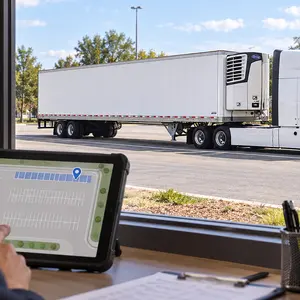
- Access: truck space, yard, ramp or shoulder, entrance instructions and available clearance.
- Unit: Thermo King or Carrier, model, serial number, controller and trailer asset number.
- Condition: running, no-start, shutdown, alarm, setpoint and temperature trend.
- History: time since loading, door events, standby use, restart attempts and recent repairs.
- Coordination: driver, fleet dispatcher and facility contact who can authorize access.
This information does not guarantee a roadside repair. It removes preventable uncertainty from an Illinois route call and gives the technician a defined equipment and access problem to solve.
Illinois coverage and planned work beyond the route
Illinois is the primary service area for reefer work. I-80 calls are accepted according to the actual location and service availability; the state line is not used to imply automatic emergency coverage on the remainder of the transcontinental highway.
Planned fleet assignments in nearby states may be coordinated separately when travel, site access and the work scope are agreed in advance. They are scheduled fleet work, not an extension of the I-80 Illinois corridor promise.
Chicago-area I-80 calls and requests elsewhere on the Illinois corridor are assessed from the trailer’s actual position and work access.