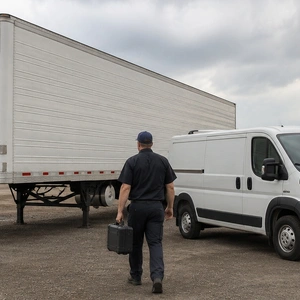


A transport refrigeration failure on I-55 creates two problems at once. The Thermo King or Carrier unit needs diagnosis, while the trailer must be placed where a technician can reach it without turning a traffic hazard into a work area. Location, access and the unit's operating condition determine the first step; a general statement that the trailer is somewhere on the interstate does not.
Ustarshah coordinates mobile reefer repair for I-55 calls within Illinois. This is a route-based service page, not a promise of identical response times along every mile and not coverage of I-55 outside the state. Congestion, weather, construction, parking restrictions and the trailer's actual position affect how the call is routed.
Start with a location another person can find
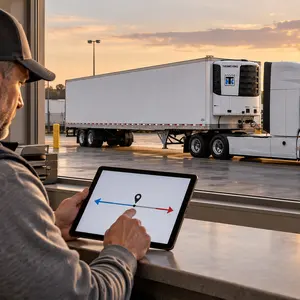
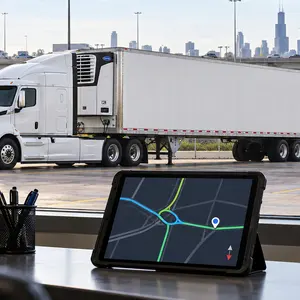
“Northbound on I-55” is not enough for dispatch. Send the direction of travel, nearest exit or mile marker, current municipality if known and the name of the parking facility or business when the trailer is off the roadway. A shared location pin helps, but it should be paired with a written reference in case the pin marks the opposite carriageway or an inaccessible side of a property.
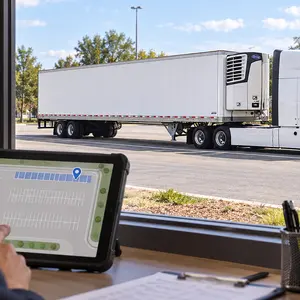
If the trailer is inside a gated yard, truck stop or customer facility, include the entrance, gate instructions and a contact who can authorize access. If it is on a ramp or shoulder, say so plainly. Dispatch needs to distinguish a parking-space call from an active roadside hazard before service equipment is sent.
A highway shoulder is not a normal repair bay
A narrow shoulder beside live traffic may not provide enough separation for open panels, tools or diagnostic equipment. The driver should follow law-enforcement and roadway-safety direction and should not create a repair setup in a location that remains exposed to moving vehicles. Illinois requires approaching drivers to slow down and move over for qualifying stopped vehicles and emergency scenes, but that rule does not make every shoulder suitable for mechanical work.
When safe access is not available, the first service decision may be to coordinate movement to a protected parking area. That decision is separate from the reefer diagnosis. Ustarshah does not present towing, traffic control or trailer recovery as part of the refrigeration repair itself.
What to report about the refrigeration unit
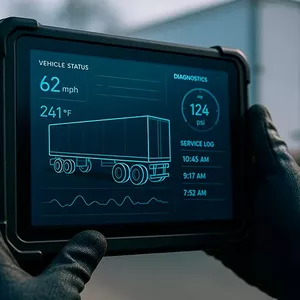
Send a photograph of the controller before clearing alarms or cycling power. Include the unit make, model and serial number, trailer number, setpoint, displayed box temperature and whether the unit is running, cranking, shutting down or completely unresponsive. If a code is visible, copy it exactly and note whether it is active or stored.
The complaint should include timing. A unit that failed immediately after a fuel stop presents a different history from one that drifted over an hour of steady travel. Note recent loading, door openings, standby operation, service work and any restart attempts. These details help the technician bring suitable test equipment without pretending that a remote message proves the failed part.
Temperature loss and no-start calls take different paths
When the unit runs but the box is warming, the intake centers on setpoint, temperature trend, operating mode, airflow and the time since loading. The technician still needs to determine whether the problem follows box conditions, control inputs, airflow or the refrigeration circuit. A warm display alone does not identify a compressor, valve or refrigerant fault.
When the unit will not start, the first checks move toward power delivery, connections, starting controls, fuel supply where applicable and the shutdown history. Repeated cranking or uncontrolled resets can erase useful evidence and may add another failure. The safest driver action is to preserve the display information and report what the unit did.
Thermo King and Carrier information stays platform-specific
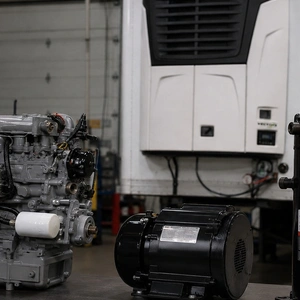
Thermo King and Carrier trailer units share broad refrigeration functions, but their controllers, alarm definitions, component layouts and diagnostic procedures are not interchangeable. A recognizable housing or a remembered code is not enough. The technician needs the exact unit and controller family before using detailed service information.
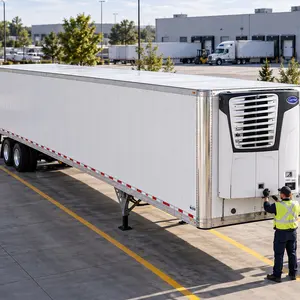
Photographs should show the complete front-mounted unit, the controller and the data plate area. Do not remove panels beside traffic to obtain internal photographs. If exact identification cannot be confirmed safely, the exterior view and controller state are better evidence than a guessed model name.
I-55 access changes from freight lanes to urban approaches
I-55 is a major north-south Illinois corridor and carries substantial truck traffic. Its Chicago-area section also connects with major interstates and experiences heavy congestion. A service position near a freight facility, an interchange ramp and a protected parking area can be only a few miles apart yet require very different access plans.
For calls approaching the Chicago freight network, report the side of the interchange and the intended direction after the repair. Around Joliet and the I-80 connection, specify the ramp or facility because naming both highways leaves the position unclear. Farther along the Illinois route, the nearest exit, mile marker and safe parking option become more useful than a distant city name.
What mobile service can establish on site
At a suitable location, a technician can confirm the complaint, review alarms and operating history, inspect accessible systems and take measurements appropriate to the unit. The purpose is to identify the fault domain and determine whether a field repair can be completed under the actual conditions.
Some calls can be resolved with an accessible electrical, starting, fuel or control repair when the correct part and tools are available. Others need sealed-system equipment, extended runtime testing, contamination control or shop access. The field visit should produce a clear next step even when the full repair cannot be completed beside the route.
Parts availability is confirmed after identification
A service vehicle cannot be treated as a warehouse for every Thermo King and Carrier configuration. Parts selection begins with the model and serial number, then follows the confirmed fault. Components that look similar may use different connectors, ratings, mounting arrangements or controller requirements.
If the needed part is not confirmed before dispatch, the call can still establish the failure and stabilize the operating decision. The service record should distinguish a completed repair from a temporary operating result or a recommendation to move the unit for further work.
Protect the load decision without claiming cargo control
The fleet, shipper, receiver and other responsible parties control cargo-handling decisions. A reefer technician reports the unit's condition, current temperature information and whether the system can be tested or restored. Ustarshah does not promise cargo condition or replace the customer's cold-chain procedures.
Dispatch should record product requirements, current readings and the direction of temperature movement while service is being arranged. If the unit cannot maintain the required condition, the fleet can use the technical findings when deciding whether to hold, move or transfer the load through its own authorized process.
Verification matters before the trailer returns to the route
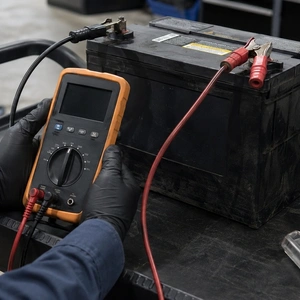
A cleared alarm or successful start is not enough by itself. After repair, the technician checks the functions related to the original complaint. Depending on the work, that may include repeated starts, charging behavior, stable controller inputs, airflow or an observed temperature trend over an appropriate test period.
The closeout should state what was reported, what was observed, what was repaired and what the unit did during verification. Any limitation should be written plainly. That gives the fleet a defensible operating decision and avoids a vague statement that the reefer appeared to be running.
Information checklist for an I-55 reefer service request
- Exact position: direction, nearest exit or mile marker, facility name and location pin.
- Access condition: parking space, yard, ramp, shoulder, gate contact and available room around the unit.
- Equipment identity: Thermo King or Carrier, model, serial number, trailer and fleet asset number.
- Operating evidence: controller photograph, active and stored alarms, setpoint and current temperature.
- Failure sequence: what happened first, how long the unit ran and whether the problem returned after a restart.
- Load context: loading time, recent door activity and the responsible dispatch contact.
These details allow the route call to begin as a defined service event. Although they cannot guarantee a particular arrival time or a roadside repair, they reduce avoidable delay caused by an uncertain location, unknown equipment and missing fault history.
Illinois corridor coverage and coordinated fleet travel
Illinois is the primary reefer service area. Calls on I-55 are scheduled according to the actual Illinois location, road conditions, safe access and technician availability. The service is not described as blanket coverage outside the state.
Separate fleet assignments in nearby states, including Indiana, may be coordinated in advance when the work scope, travel and site access are agreed. That planned fleet work is different from representing an emergency I-55 response as interstate-wide service.