Transport Refrigeration Chicagoland

Mobile Load Transfer and Trailer Recovery for Failed Reefers

When refrigerated transport fails on the road, every minute matters. Learn how specialized mobile teams handle emergency load transfers and trailer recovery to safeguard your cargo and minimize costly delays.

Carrier & Thermo KingReefer · TRU · APU service
EPA 608 Type II CertifiedRecovery & recharge
Licensed & InsuredCOI & additional insured
24/7 Illinois-Wide RoadsideEvery major freight corridor
Failed Reefer Stabilization Assessment

Failed Reefer Stabilization Assessment

We determine whether the unit can be stabilized on site long enough for repair, controlled holding, or a safer transfer decision.

Cargo Temperature Condition Documentation

Cargo Temperature Condition Documentation

Available temperature history, current box condition, failure timing, and service observations are recorded to support the fleet decision without making cargo claims.

Repair Versus Transfer Decision Support

Repair Versus Transfer Decision Support

Mechanical scope, expected service path, trailer access, replacement equipment, and operating deadlines are weighed before cargo movement begins.

Replacement Trailer Transfer Coordination

Replacement Trailer Transfer Coordination

When transfer is selected, service activity is coordinated with the fleet, site contact, and receiving trailer to reduce avoidable handling delays.

Disabled Trailer Recovery Planning

Disabled Trailer Recovery Planning

Trailer condition, location, access, towing needs, and destination requirements are organized when the failed equipment cannot return to service in place.

Chain of Custody and Service Closeout

Chain of Custody and Service Closeout

The handoff records unit status, observed temperatures, actions completed, transfer or recovery disposition, and the parties receiving the equipment.

When Trailer Recovery Is the Better Option

In scenarios involving structural damage, locked wheels, unresponsive electrical systems or sealed cargo, direct towing or relocation becomes the safer and faster option. We maintain access to regional drop lots and depot staging zones where units can be parked safely for later extraction or repair. Coordination with fleet operations and dispatch is maintained in real time to ensure visibility and continuity.

Be Prepared Before the Reefer Fails

Planning for trailer failure includes knowing who to call and what response standards to expect. Our clients receive pre-cleared access to all mobile transfer protocols, route-specific ETA estimates and escalation support based on freight class. We provide full logs of each operation for internal fleet review, client assurance and compliance checks.

What Happens When a Reefer Trailer Fails En Route

Reefer units can fail due to compressor breakdown, battery drain, coolant loss, or ECM fault. Once the unit stops regulating internal temperature, thermal deviation begins. Depending on ambient conditions, certain loads may only remain viable for 30 to 60 minutes.

Take Action When Every Minute Counts

A stalled reefer trailer doesn’t have to mean lost cargo or damaged schedules. With mobile reefer load transfer and recovery, your operation stays in motion.

When a refrigerated trailer fails mid-route, the immediate concern is protecting the cargo. A non-functional reefer unit risks temperature deviation, load spoilage, missed delivery windows and financial losses. Dispatchers are left with urgent decisions under pressure, without visibility or clear options.

We provide on-site load transfer and trailer recovery services designed to minimize downtime and avoid unnecessary towing. Our mobile teams are equipped to secure, relocate or repackage temperature-sensitive freight and coordinate the extraction or escort of disabled reefers directly to service yards or holding points.

Mobile Reefer Service Coverage That Works On Your Schedule

Our response structure prioritizes freight integrity and fleet continuity. We operate across critical zones in the Chicago industrial corridor, covering distribution hubs, intermodal yards and high-density logistics parks. Arrival times are optimized based on route density and real-time asset positioning. Each dispatch includes a technician and cargo-handling operator to ensure seamless coordination between equipment status and freight demands.

What Happens When a Reefer Trailer Fails En Route

Reefer units can fail due to compressor breakdown, battery drain, coolant loss, or ECM fault. Once the unit stops regulating internal temperature, thermal deviation begins. Depending on ambient conditions, certain loads may only remain viable for 30 to 60 minutes. Delays in response or reliance on general roadside assistance puts cargo at risk. Fleet managers often must decide between waiting for diagnostics, rerouting backup units or initiating a load transfer plan.

Our Load Transfer and Recovery Protocol

We execute structured interventions for compromised refrigerated trailers. First, we isolate the source of unit failure. If the issue is repairable on-site, restoration proceeds immediately. If not, we deploy a secondary reefer trailer or transfer equipment to reload the cargo on-location. Environmental controls are maintained throughout the process to protect the freight profile. Our tow alternatives include flatbed extraction, axle lifts or convoy shadowing, based on the trailer’s weight, distance to depot and freight classification.

Three Outcomes of Immediate Load Transfer

  • Preservation of cargo temperature integrity
  • Reassignment of delivery route with minimal delay
  • Avoidance of penalties for spoiled or late freight

Technical Coordination Without Guesswork

Each mobile response team is trained in TRU fault isolation, reefer diagnostics and refrigerated freight handling. We use calibrated sensors to verify residual unit performance before engaging in transfer. Trailer data logs are retrieved to document time of failure, temperature drift and unit behavior — information useful for warranty validation or client reporting. If the unit must be transported, we initiate secure coupling to preserve suspension geometry and ABS stability en route.

When Trailer Recovery Is the Better Option

In scenarios involving structural damage, locked wheels, unresponsive electrical systems or sealed cargo, direct towing or relocation becomes the safer and faster option. We maintain access to regional drop lots and depot staging zones where units can be parked safely for later extraction or repair. Coordination with fleet operations and dispatch is maintained in real time to ensure visibility and continuity.

Why Tow Alternatives Outperform Standard Wreckers

General towing services lack cargo temperature monitoring, freight insurance coordination and reefer fault analysis. Our tow alternatives are reefer-specific, designed around trailer wheelbase, axle configuration and load sensitivity. This reduces the risk of further damage and prevents DOT violations during movement. Additionally, all transfers and recoveries are digitally documented and traceable for compliance review.

Key Factors That Influence Our Response

  • Time since reefer failure
  • Type and sensitivity of cargo
  • Trailer accessibility and road clearance
  • Proximity of replacement unit or depot

Full-Service Support from Field to Facility

Whether the situation requires technical triage, complete load extraction or trailer reallocation, our service closes the gap between breakdown and resolution. No unqualified hand-offs. No delayed decisions. Our solutions operate under real-world constraints, aligned with logistics priorities and regulatory frameworks.

Be Prepared Before the Reefer Fails

Planning for trailer failure includes knowing who to call and what response standards to expect. Our clients receive pre-cleared access to all mobile transfer protocols, route-specific ETA estimates and escalation support based on freight class. We provide full logs of each operation for internal fleet review, client assurance and compliance checks.

Take Action When Every Minute Counts

A stalled reefer trailer doesn’t have to mean lost cargo or damaged schedules. With mobile reefer load transfer and recovery, your operation stays in motion. Our team ensures critical freight keeps moving — safely, rapidly and without unnecessary detours.

Coordinated Load Transfer Without Guessing at Reefer Condition

Each mobile response team is trained in TRU fault isolation, reefer diagnostics and refrigerated freight handling. We use calibrated sensors to verify residual unit performance before engaging in transfer. Trailer data logs are retrieved to document time of failure, temperature drift and unit behavior — information useful for warranty validation or client reporting.

Why Tow Alternatives Outperform Standard Wreckers

General towing services lack cargo temperature monitoring, freight insurance coordination and reefer fault analysis. Our tow alternatives are reefer-specific, designed around trailer wheelbase, axle configuration and load sensitivity. This reduces the risk of further damage and prevents DOT violations during movement.

Mobile Reefer Service Coverage That Works on Your Schedule

Our response structure prioritizes freight integrity and fleet continuity. We operate across critical zones in the Chicago industrial corridor, covering distribution hubs, intermodal yards and high-density logistics parks. Arrival times are optimized based on route density and real-time asset positioning.

Full Service Support from Field to Facility

Whether the situation requires technical triage, complete load extraction or trailer reallocation, our service closes the gap between breakdown and resolution. Our solutions operate under real-world constraints, aligned with logistics priorities and regulatory frameworks.

Load Transfer and Recovery Questions for Failed Refrigerated Trailers

When does transferring the load become the better option than continued repair?

When the unit cannot be restored to controlled operation in the time the cargo has left. That judgement rests on product tolerance, current box temperature and its rate of rise, ambient conditions, and how far the destination remains. Persisting with a repair past that point risks losing both the load and the working window.

What does a controlled load transfer involve at the roadside?

Bringing a serviceable trailer alongside, minimising door-open time, moving freight in a sequence that limits exposure, recording temperatures before and after, and securing the load correctly in the receiving unit. Ambient conditions during the transfer are part of the record, since the receiving trailer inherits whatever heat the process adds.

How do recovery options differ once the unit cannot be restarted?

By what has failed and where the asset sits. A trailer that rolls normally can be moved to a service point under its own running gear with the load transferred or accepted as at risk. One that cannot be moved safely needs lifting or flatbed recovery. Weight, position, and distance decide which applies.

Should a dispatcher prepare anything before a transfer decision is taken?

Yes, and assembling it during the failure costs the time the decision was meant to save. Product tolerance and the current temperature record, the receiving trailer identity and its confirmed condition, an access point with room for two trailers, someone authorised to approve the movement, and the receiving customer informed.

Which parts of a recovery sit outside refrigeration service?

The towing or lifting operation itself, freight handling labour, claims documentation with the receiver, and any structural repair to the trailer. Refrigeration service confirms the unit condition, states whether the cargo can be protected in place, and verifies the receiving unit. The rest is coordinated with the operators who own it.

Mobile Reefer Repair Near Me in Illinois

A nearby mobile reefer call starts with exact location, unit identity, temperature trend, load status and safe access—not a promised arrival time.

Emergency Reefer Repair Without Towing

A field-first response can avoid unnecessary towing when the location and repair scope allow it; unsafe or shop-dependent work still requires relocation.

24-Hour Mobile Reefer Service in Illinois

After-hours reefer response is routed by exact location, safe access, unit condition and current technician availability; no fixed ETA is implied.

Mobile Carrier and Thermo King Reefer Repair

Mobile service begins with make, model, controller, symptom and operating context so Carrier and Thermo King units follow the correct diagnostic path.

Roadside Reefer Alarm-Code Diagnostics

A roadside alarm code is evidence for triage, not a guaranteed diagnosis; safe access and direct checks determine whether the work stays in the field.

Roadside Reefer Refrigerant Leak Diagnosis

Refrigerant loss is diagnosed before charging; leak location, repairability, unit identification and worksite safety determine the correct service path.

Mobile Reefer Electrical and Battery Diagnostics

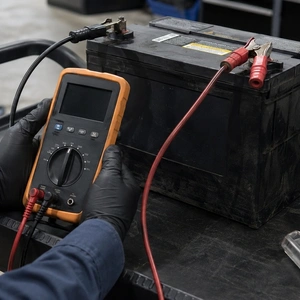
Field electrical diagnosis separates battery condition, connections, charging, control power and starting-circuit evidence before parts are replaced.

Predictive Mobile Diagnostics to Prevent Reefer Downtime

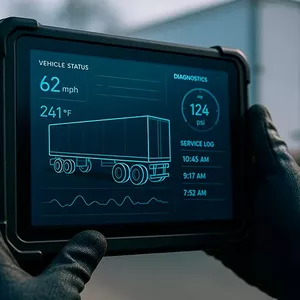
Avoid costly delays with real-time fault detection and field-ready mobile diagnostics. Discover how predictive service strategies reduce breakdown risks and keep your reefer fleet running without interruptions.

Industrial Corridor Mobile Repair Response Times and Coverage

Timely service coverage matters when every mile counts. Explore how mobile support across industrial routes minimizes delivery risks, cuts response delays, and keeps your fleet on schedule — wherever the cargo needs to go.

Reefer Repair Along I-55 in Illinois

A reefer failure on I-55 needs a usable location, safe work position and accurate unit information before field service begins. Illinois corridor support is planned around access, fault evidence and repair conditions at the trailer.

Reefer Repair Along I-80 in Illinois

I-80 reefer service calls can begin on a rural stretch, at a truck stop or inside the busy Joliet freight corridor. Exact east-west position, equipment identity and safe access determine how the Illinois repair visit is planned.

Reefer Repair Along I-90 and I-94 in Illinois

Illinois I-90 and I-94 calls cross tollway, suburban interchange and urban expressway conditions. The exact route branch, direction, parking position and reefer identity determine how service is coordinated.

Truck Stop Reefer Repair for Thermo King and Carrier Units

A truck stop can provide a safer alternative to an interstate shoulder, but it remains shared property. Parking position, site rules and clearance around the trailer front wall must be confirmed before mobile reefer work begins.

Loading Dock Reefer Repair for Thermo King and Carrier Units

A reefer failure at a loading dock affects the unit, trailer position and facility schedule. Mobile work starts only after the responsible parties confirm access, movement authority and a safe working area.

Fleet Yard Reefer Repair and Service

Corrective reefer repair at Illinois fleet yards, organized around an exact trailer list, safe access, unit-by-unit diagnosis and a clear status handoff.

Reefer Repair at Warehouses and Distribution Centers

Corrective service for trailer refrigeration units on warehouse and distribution-center property, coordinated with access rules, trailer movement and facility operations.

Call us: (312) 680 4033