Transport Refrigeration Chicagoland

Industrial Corridor Mobile Repair Response Times and Coverage

Timely service coverage matters when every mile counts. Explore how mobile support across industrial routes minimizes delivery risks, cuts response delays, and keeps your fleet on schedule — wherever the cargo needs to go.

Carrier & Thermo KingReefer · TRU · APU service
EPA 608 Type II CertifiedRecovery & recharge
Licensed & InsuredCOI & additional insured
24/7 Illinois-Wide RoadsideEvery major freight corridor
Location and Unit Details Intake

Location and Unit Details Intake

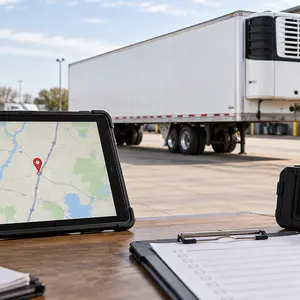
Dispatch records the exact industrial site, access point, trailer position, TRU identity, fault state, and cargo condition before routing service.

Industrial Site Access Coordination

Industrial Site Access Coordination

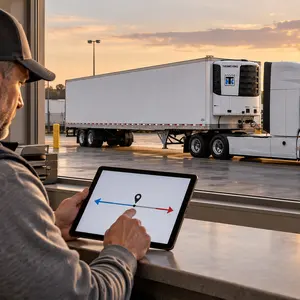
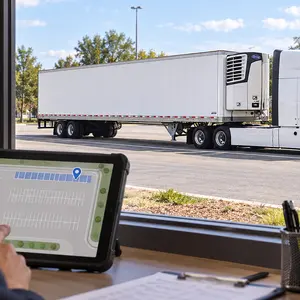
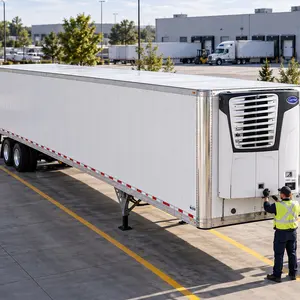
Gate rules, dock contacts, yard restrictions, working space, and safety requirements are confirmed so the technician can reach the disabled unit efficiently.

Freight Window Repair Planning

Freight Window Repair Planning

The repair plan accounts for appointment timing, loading activity, trailer availability, and the operational consequence of moving or holding the unit.

Mobile TRU Fault Triage

Mobile TRU Fault Triage

Alarm data and unit behavior are reviewed before arrival to identify likely tool, part, and skill requirements without promising a diagnosis remotely.

On Site Repair Scope Confirmation

On Site Repair Scope Confirmation

At the trailer, the technician separates field repairable work from jobs that need a shop, additional parts, or a different recovery plan.

Dispatch Closeout and Next Move Planning

Dispatch Closeout and Next Move Planning

Service findings, operating status, restrictions, and the recommended next movement are documented for dispatch and facility teams.

Mobile Reefer Service Coverage Across Chicago Corridors

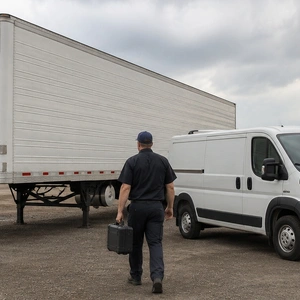
Our field teams operate in full alignment with Chicago’s logistics infrastructure. We map service zones by traffic flow, peak hours, and industrial cluster proximity to maintain a mobile reefer service coverage model optimized for response time. Units are stationed near major corridors, ensuring dispatch can occur within minutes of a callout.

ETA Calculations Based on Live Load and Location

Each dispatch includes a live ETA based on GPS triangulation, fleet load distribution, and current traffic density. This eliminates guesswork and gives fleet operators accurate arrival forecasts for each service unit. Whether you are in an industrial park or a rail-linked hub, our system accounts for logistical bottlenecks to minimize downtime.

Why Response Time Matters in Industrial Reefer Operations

Unplanned reefer downtime at a terminal or during staging can ripple through entire distribution networks. By delivering response within an average of 35 minutes in primary zones and under 60 minutes for extended coverage, we help protect cold chain integrity and avoid missed delivery slots.

Closing the Gap Between Alert and Arrival

Mobile reefer repair is only effective if the arrival aligns with real operational pressure. That’s why we focus not just on fast deployment, but on actionable ETA tracking and sector-specific technician readiness. Service in industrial corridors is not just about fixing units—it is about eliminating uncertainty and enabling forward motion.

A reefer breakdown in a busy industrial corridor can stall deliveries, disrupt schedules, and create costly delays. When every minute counts, waiting hours for repair service is not an option. Logistics hubs demand immediate action backed by precise ETA estimates and real-time zone tracking.

Mobile Reefer Service Coverage Across Chicago Corridors

Our field teams operate in full alignment with Chicago’s logistics infrastructure. We map service zones by traffic flow, peak hours, and industrial cluster proximity to maintain a mobile reefer service coverage model optimized for response time. Units are stationed near major corridors, ensuring dispatch can occur within minutes of a callout.

ETA Calculations Based on Live Load and Location

Each dispatch includes a live ETA based on GPS triangulation, fleet load distribution, and current traffic density. This eliminates guesswork and gives fleet operators accurate arrival forecasts for each service unit. Whether you are in an industrial park or a rail-linked hub, our system accounts for logistical bottlenecks to minimize downtime.

Optimized Response at Logistics Hubs and Freight Zones

Repair coordination is tailored to industrial park reefer response needs. That includes deployment near cold storage clusters, intermodal terminals, and warehouse districts where reefer traffic concentrates. Our hub-adapted approach lets us cut average wait times by 30 to 50 percent in high-demand zones.

Real-Time Coverage Maps for Fleet Planning

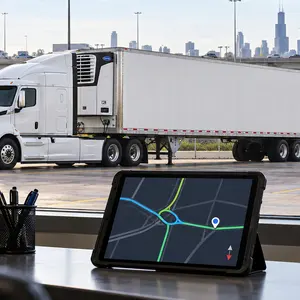
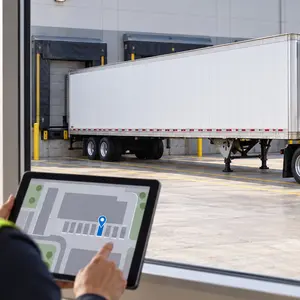
Clients receive reefer ETA map chicago overlays during service setup. These dynamic maps highlight active zones, technician availability, and projected response times for each industrial sector. Fleet managers use them for real-time routing decisions and pre-emptive scheduling based on route exposure risk.

Mobile Repair Response Tailored to Freight Timing

Our mobile workflow aligns with freight schedules and route timing windows. Dispatch decisions account for departure deadlines, unloading appointments, and cargo sensitivity to ensure reefer repairs do not interfere with core logistics commitments. Technicians are trained to diagnose and repair with minimal disruption on-site.

Strategic Technician Distribution for Faster Deployment

Instead of a centralized depot model, we maintain distributed readiness along major freight corridors. Technicians are positioned within pre-zoned hotpoints that reflect reefer density and service history. This proximity model improves alternator and circuit response times in load-critical windows.

Full Coverage Without Restrictive Service Limits

There are no hard boundary restrictions for service coverage. While core response zones have defined average ETAs, we extend repair operations to peripheral industrial sectors upon request. Advanced notice allows zone override scheduling, ensuring consistent access to reefer repair across the Chicago metro corridor system.

Why Response Time Matters in Industrial Reefer Operations

Unplanned reefer downtime at a terminal or during staging can ripple through entire distribution networks. By delivering response within an average of 35 minutes in primary zones and under 60 minutes for extended coverage, we help protect cold chain integrity and avoid missed delivery slots.

Precision Dispatch for Mobile Reefer Repairs

We use incident priority ranking to structure response. Failures that threaten cargo integrity or cause cascading route delays are flagged for accelerated handling. Each field tech receives pre-task load data to align repair tactics with freight urgency, eliminating unnecessary delays and ensuring targeted intervention.

Closing the Gap Between Alert and Arrival

Mobile reefer repair is only effective if the arrival aligns with real operational pressure. That’s why we focus not just on fast deployment, but on actionable ETA tracking and sector-specific technician readiness. Service in industrial corridors is not just about fixing units—it is about eliminating uncertainty and enabling forward motion.

Ensure your fleet stays on schedule and your cargo remains protected. Trust a response system built for industrial logistics pressure—request mobile service aligned with your zone now.

Mobile Repair Response Tailored to Freight Timing

Our mobile workflow aligns with freight schedules and route timing windows. Dispatch decisions account for departure deadlines, unloading appointments, and cargo sensitivity to ensure reefer repairs do not interfere with core logistics commitments. Technicians are trained to diagnose and repair with minimal disruption on-site.

Optimized Response at Logistics Hubs and Freight Zones

Repair coordination is tailored to industrial park reefer response needs. That includes deployment near cold storage clusters, intermodal terminals, and warehouse districts where reefer traffic concentrates. Our hub-adapted approach lets us cut average wait times by 30 to 50 percent in high-demand zones.

Real Time Coverage Maps for Fleet Planning

Clients receive reefer ETA map chicago overlays during service setup. These dynamic maps highlight active zones, technician availability, and projected response times for each industrial sector. Fleet managers use them for real-time routing decisions and pre-emptive scheduling based on route exposure risk.

Full Coverage Without Restrictive Service Limits

There are no hard boundary restrictions for service coverage. While core response zones have defined average ETAs, we extend repair operations to peripheral industrial sectors upon request. Advanced notice allows zone override scheduling, ensuring consistent access to reefer repair across the Chicago metro corridor system.

Coverage and Access Questions for Reefer Service Along Chicago Freight Corridors

What actually governs how quickly a technician can reach a stranded unit?

Position and access more than distance. A trailer inside a secured yard needs gate coordination, a dock position depends on the facility releasing the bay, and a roadside stop depends on where safe access exists. Traffic conditions on the corridor sit alongside those. Any arrival estimate is a projection against all four, not a commitment.

How can a fleet shorten the gap between a fault and work starting?

By removing the access unknowns at the point of the call. Exact position with a gate or dock reference, a live contact who can authorise entry, confirmation that the trailer can be reached, and the unit identifier all remove steps that otherwise happen after arrival. Access delay is frequently longer than travel time.

Why do industrial corridor calls behave differently from open-road ones?

Density cuts both ways. Corridors around intermodal terminals, cold storage clusters, and warehouse districts concentrate reefer traffic, so work is closer at hand, while the same density brings gate queues, restricted movement, and congestion at peak periods. An open-road stop is farther away but usually simpler to reach once someone is moving.

When should a fleet plan coverage rather than react to a breakdown?

Before the seasonal peaks that expose weak units, and before assigning a marginal trailer to a lane with poor access. Knowing which corridors and facilities are straightforward to reach, and which are not, changes how an at-risk asset is deployed. That planning is worth more than any figure quoted after the fault.

Which arrangements fall outside a mobile service call at these locations?

Facility access permissions, gate and security arrangements, yard movement of the trailer, and any tow or recovery operation. Loading and freight handling remain with the site. Those are coordinated around the service call rather than performed as part of it, and treating them otherwise delays both the access and the repair.

Mobile Reefer Repair Near Me in Illinois

A nearby mobile reefer call starts with exact location, unit identity, temperature trend, load status and safe access—not a promised arrival time.

Emergency Reefer Repair Without Towing

A field-first response can avoid unnecessary towing when the location and repair scope allow it; unsafe or shop-dependent work still requires relocation.

24-Hour Mobile Reefer Service in Illinois

After-hours reefer response is routed by exact location, safe access, unit condition and current technician availability; no fixed ETA is implied.

Mobile Carrier and Thermo King Reefer Repair

Mobile service begins with make, model, controller, symptom and operating context so Carrier and Thermo King units follow the correct diagnostic path.

Roadside Reefer Alarm-Code Diagnostics

A roadside alarm code is evidence for triage, not a guaranteed diagnosis; safe access and direct checks determine whether the work stays in the field.

Roadside Reefer Refrigerant Leak Diagnosis

Refrigerant loss is diagnosed before charging; leak location, repairability, unit identification and worksite safety determine the correct service path.

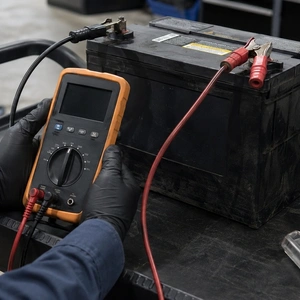
Mobile Reefer Electrical and Battery Diagnostics

Field electrical diagnosis separates battery condition, connections, charging, control power and starting-circuit evidence before parts are replaced.

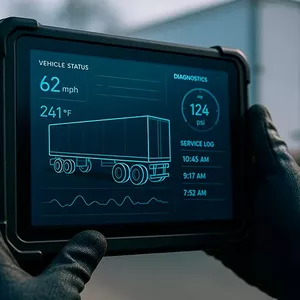
Predictive Mobile Diagnostics to Prevent Reefer Downtime

Avoid costly delays with real-time fault detection and field-ready mobile diagnostics. Discover how predictive service strategies reduce breakdown risks and keep your reefer fleet running without interruptions.

Mobile Load Transfer and Trailer Recovery for Failed Reefers

When refrigerated transport fails on the road, every minute matters. Learn how specialized mobile teams handle emergency load transfers and trailer recovery to safeguard your cargo and minimize costly delays.

Reefer Repair Along I-55 in Illinois

A reefer failure on I-55 needs a usable location, safe work position and accurate unit information before field service begins. Illinois corridor support is planned around access, fault evidence and repair conditions at the trailer.

Reefer Repair Along I-80 in Illinois

I-80 reefer service calls can begin on a rural stretch, at a truck stop or inside the busy Joliet freight corridor. Exact east-west position, equipment identity and safe access determine how the Illinois repair visit is planned.

Reefer Repair Along I-90 and I-94 in Illinois

Illinois I-90 and I-94 calls cross tollway, suburban interchange and urban expressway conditions. The exact route branch, direction, parking position and reefer identity determine how service is coordinated.

Truck Stop Reefer Repair for Thermo King and Carrier Units

A truck stop can provide a safer alternative to an interstate shoulder, but it remains shared property. Parking position, site rules and clearance around the trailer front wall must be confirmed before mobile reefer work begins.

Loading Dock Reefer Repair for Thermo King and Carrier Units

A reefer failure at a loading dock affects the unit, trailer position and facility schedule. Mobile work starts only after the responsible parties confirm access, movement authority and a safe working area.

Fleet Yard Reefer Repair and Service

Corrective reefer repair at Illinois fleet yards, organized around an exact trailer list, safe access, unit-by-unit diagnosis and a clear status handoff.

Reefer Repair at Warehouses and Distribution Centers

Corrective service for trailer refrigeration units on warehouse and distribution-center property, coordinated with access rules, trailer movement and facility operations.

Call us: (312) 680 4033