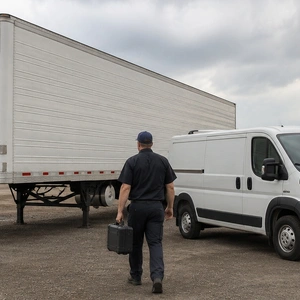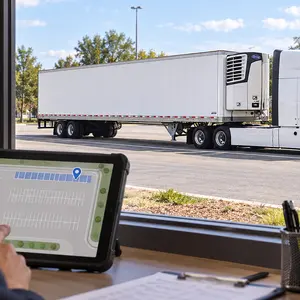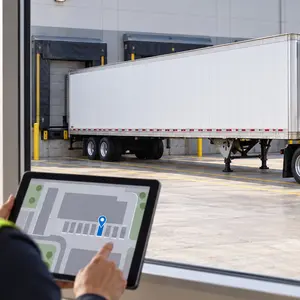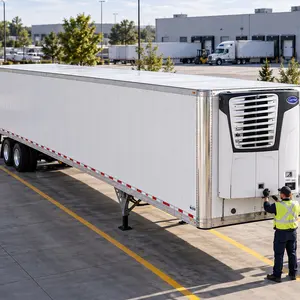


Emergency reefer repair can begin in the field without automatically towing the trailer to a shop. Whether it can also finish there depends on the worksite, the installed unit, the failure, component access, and the test required to verify the result. “Without towing” describes a field-first decision, not a guarantee that every repair can be completed beside the road or at a dock.
Move to a Safe Work Position First
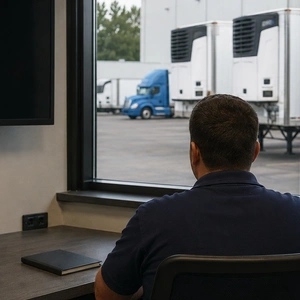
A traffic lane or exposed shoulder is not a repair bay. Drivers should follow applicable roadside and facility safety procedures and use a safe parking area whenever possible. Dispatch should provide the precise location, direction of travel, trailer position, site contact, gate instructions, and any restriction that affects access to the refrigeration unit.
At a dock, coordinate with facility personnel before panels are opened or equipment is moved. At a truck stop or yard, reserve enough clearance for the technician and service vehicle. If safe access cannot be created, relocation is part of the service decision.
Protect the Evidence and Report the Temperature Trend
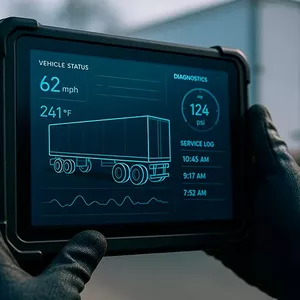
Record the setpoint, displayed temperature, time and direction of change, load status, active alarms, and what the unit did before the shutdown or loss of cooling. Avoid repeated resets or restarts that erase history or change the symptom unless an authorized procedure requires it.
The service team repairs the refrigeration equipment. Cargo disposition, acceptance, transfer, and claims decisions belong to the fleet and other authorized cargo parties. Accurate temperature and timing information helps those parties act while the equipment diagnosis proceeds.
Field Work Is Organized by Failure Domain
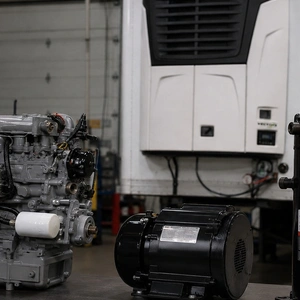
No-power and no-crank concerns start with accessible electrical and starting evidence. Crank-without-start behavior adds fuel and control questions. A running unit with inadequate cooling requires airflow, heat-exchange, defrost, sensor, refrigerant-circuit, controller, and mechanical evidence appropriate to the installed platform.
Alarm codes narrow the direction but do not prove a failed part. Thermo King and Carrier controllers use platform-specific logic, so a number reported over the phone is paired with the exact make, model, controller family, code history, and observed operating behavior.
Repairs That May Fit a Mobile Call
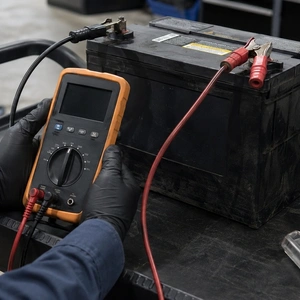
Accessible connection, battery, charging, starting, belt, sensor, fuel-supply, or other confirmed component work may be possible at a safe site. Refrigerant work may be considered only when the leak, serviceability, recovery requirements, equipment, and worksite support a compliant repair and meaningful verification.
Parts availability is checked against the identified unit and confirmed failure. Dispatch should not promise a specific component before fitment and stock are verified. If a temporary action restores operation, the record must distinguish it from a completed permanent repair.
Conditions That Require Shop Escalation
- The trailer cannot be positioned safely for service.
- The fault needs extended runtime or controlled mode changes to reproduce.
- Major disassembly, recovery work, difficult access, or shop equipment is required.
- The unit has a repeat problem that short field visits have not resolved.
- The repair can be installed in the field but cannot be verified there.
A shop recommendation is not a failed mobile call. It is the correct outcome when the evidence shows that continuing roadside work would add uncertainty, delay, or safety risk.
Illinois Interstates, Docks, and Fleet Yards
Primary coverage extends across Illinois. Calls may come from interstate corridors, Chicago-area logistics facilities, suburban docks, warehouses, and fleet yards. The service location should be described accurately rather than converted into a separate city page or a guaranteed response zone.
Fleet assignments in Indiana or another state may be arranged in advance when the company can support the travel and work scope. That is different from claiming routine local availability at every out-of-state location.
Close the Call With a Defined Operating Decision
After repair or stabilization, verify the relevant start, run, control, and temperature behavior for the time and conditions available. Record cleared and remaining alarms, work performed, installed parts when applicable, and the limits of the test.
The final disposition should be explicit: returned to operation after verified field repair, released with a defined monitoring instruction, scheduled for shop diagnostics, or held for a fleet and cargo decision. This is how field-first service reduces unnecessary towing without pretending that towing is never required.